guide
How to Discover New Music in 2026 Without Getting Stuck
Use algorithms for speed, human curators for context, complete releases for depth, and direct artist channels to make new discoveries last.
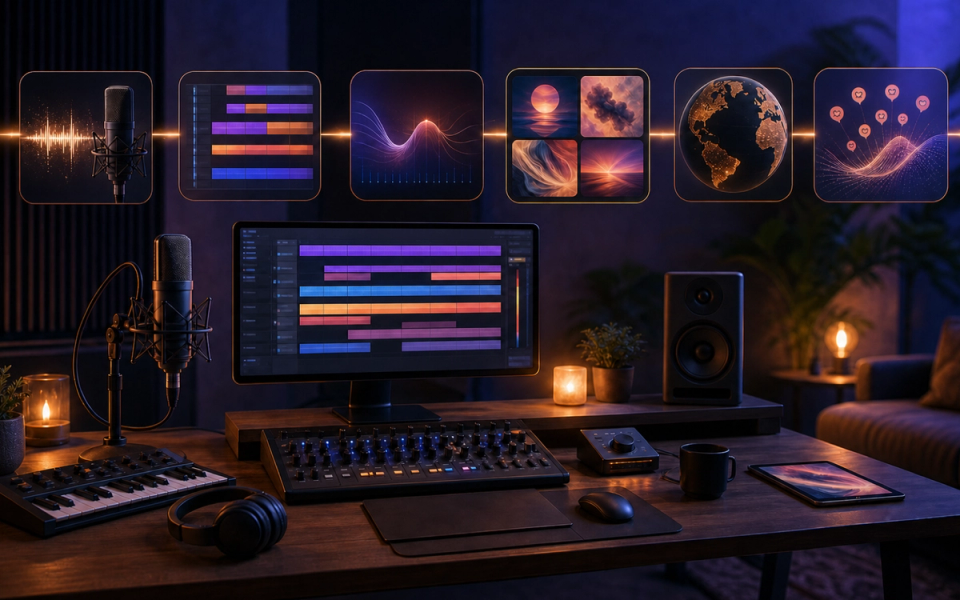
To discover new music in 2026, use more than one route. Start with a streaming feature for speed, add a human source for context, and follow the artist or scene when something connects. Algorithms are useful, but radio, friends, record shops, live bills, editorial writing, games, film, and direct artist pages reveal music through different kinds of trust.
Key points
- Use personalized playlists to branch from something you already like.
- Use human-curated radio, editorial playlists, and music writing when you want explanation and surprise.
- Short-form video is powerful for first contact, but follow a track beyond its clip.
- Save discoveries by artist, album, label, producer, venue, or scene—not only by mood.
- Reset the process when recommendations become repetitive.
Start with one song, not a vague genre
The easiest way to discover new music is to begin with a specific song you genuinely want more of. A broad request such as “new indie music” can return the most visible version of a category. A seed song carries more information: instrumentation, tempo, production, vocal character, era, and emotional shape.
Use the song’s radio or related-track feature, but do not accept every recommendation as a verdict. Listen for one connection you can name. Perhaps it is the drum sound, a restrained vocal, a particular rhythmic feel, or a long-form arrangement. Save the track that carries that quality, then branch again from the new artist.
This creates a chain rather than an endless feed. After three or four steps, open an album. A recommendation system is good at proposing nearby material; an album shows how the artist builds contrast, pacing, and identity beyond one compatible track.
Spotify, Apple Music, YouTube Music, and other services change their discovery surfaces regularly. Use their current help pages rather than relying on screenshots from old guides. Spotify’s 2026 discovery update, for example, highlights requests in DJ and other ways to steer a session. Apple Music continues to combine featured releases, charts, expert playlists, and artist pages.
Doldur’s streaming-habits explorer is a transparent demonstration of how platform and discovery labels behave in a synthetic dataset; it is not evidence about real listeners. For current survey findings with countries and samples kept separate, use the 2026 streaming statistics overview.
Use playlists, but identify who made them
“Found through a playlist” does not explain how discovery happened. The playlist might be personal, editorial, algorithmic, chart-based, or shared by a friend.
Ofcom’s 2026 UK research found that self-created playlists and service-generated mood or genre playlists both play major roles. DIMA’s U.S. research identifies playlists as the most widely used streaming feature for discovery. The practical lesson is to use each type deliberately:
- Personal playlists preserve your own path and make patterns visible over time.
- Editorial playlists bring a curator’s judgment, scene knowledge, or moment-specific brief.
- Personalized playlists efficiently connect past listening to unfamiliar tracks.
- Charts show collective attention but can overrepresent already visible music.
- Shared playlists carry the taste and context of a person or community you know.
When a playlist produces a good discovery, open the credits and artist page. The playlist is the doorway, not the full relationship.
Ask people who can explain why a song matters
Human recommendations are valuable because they often arrive with a reason. A friend may connect a song to a place, a DJ may explain a scene, and a writer may trace a production choice or historical influence. That context helps a track survive beyond first exposure.
Look for sources with a recognizable point of view:
- local and specialist radio shows;
- independent record shops and their staff lists;
- label and distributor catalogues;
- venue calendars and festival bills;
- music publications and newsletters;
- artist interviews and guest playlists;
- producers, engineers, DJs, and musicians discussing their influences.
Do not demand neutrality from every curator. A clear bias can be useful when it is visible. A label devoted to experimental electronics will not represent all music, but it may reveal a coherent world that a general-purpose feed would scatter.
Doldur Music’s catalogue and artist pages follow this principle: discovery works better when a release has a story, credits, and a durable place beyond the streaming tile.
Let radio interrupt your habits
Radio remains useful because it has a sequence you did not choose. Live and specialist shows can move across eras, regions, and levels of familiarity without optimizing every transition around your personal history.
Ofcom’s 2026 report shows that radio still occupies important settings, especially vehicles, even as at-home listening has changed. Internet radio also removes much of the geographic boundary. A listener can use a local community station, a public broadcaster, or a specialist show from another country.
When a track catches you, note the program and presenter as well as the artist. Returning to a reliable show is more efficient than repeatedly searching from zero.
Use short-form video as a clue, not the whole song
TikTok, Reels, Shorts, games, film, and television can introduce a song inside a visual moment. TikTok and Luminate’s 2025 report documents a strong relationship between activity on TikTok and wider discovery and streaming for the artists it examined. That does not mean a platform caused every later play or that a viral clip represents the full song.
When a sound stands out:
- Open the sound or music attribution.
- Confirm the artist and official recording.
- Listen to the complete track.
- Check whether the clip is sped up, remixed, live, or sampled.
- Open the release and credits.
- Save the artist somewhere you control.
This protects against a common discovery dead end: recognizing a fifteen-second section while never learning the artist, song, or larger catalogue.
When a clip and a streaming page show different totals, do not treat them as one popularity score. Doldur’s Spotify streams versus YouTube views guide explains the different units and platform objects.
Our analysis of whether TikTok made songs shorter separates the platform’s documented discovery role from claims about why songs are written a certain way.
Search by the people around a record
Artist similarity is only one route through music. Credits create other paths. Search for the producer, songwriter, featured performer, remixer, engineer, label, publisher, or studio behind a track.
A producer may connect artists from different genres through texture or arrangement. A small label may reveal a local network. A featured musician can lead to a separate catalogue that the platform’s main artist similarity does not surface.
This method also rewards accurate metadata. When credits are missing or flattened, discovery becomes more dependent on the most prominent name. Artists can help by delivering consistent contributor data and maintaining a clear release page.
Break an algorithmic loop deliberately
Recommendations can become repetitive because your recent behavior is repetitive, because the system prioritizes familiar engagement, or because you keep using the same discovery surface. That does not prove a sealed filter bubble, but it is a reason to introduce new signals.
Try one controlled change:
- exclude functional or children’s playlists from your taste profile where the service allows it;
- search for a label or venue rather than a genre;
- play an unfamiliar album from start to finish;
- listen to radio without skipping;
- browse releases from another country or decade;
- ask a friend for one album, not a hundred-song playlist;
- follow a support act from a concert bill.
Our guide to music recommendation filter bubbles explains why personal variety and similarity across users are separate questions.
Build a discovery habit that remembers
Discovery fails when every interesting track disappears into a giant “liked songs” list. Add a small system:
- Keep a monthly discovery playlist.
- Add no more than a few tracks per artist.
- Revisit it at the end of the month.
- Move lasting discoveries into artist, album, or scene playlists.
- Buy, follow, attend, or subscribe when you want a direct connection.
The goal is not perfect organization. It is enough memory to turn exposure into a relationship. A track that still matters after a second or third listen deserves more attention than a sound you merely recognized.
The Doldur listener quiz offers a playful starting point, not a scientific personality label. Use the result to enter the catalogue, then keep following your own ears.
Conclusion
The best way to discover new music in 2026 is a mixed practice: algorithms for speed, people for context, complete releases for depth, and direct artist channels for continuity. When one route starts repeating itself, switch the source rather than waiting for the feed to surprise you.
Frequently asked questions
How can I discover music without Spotify?
Use specialist radio, record shops, music publications, Bandcamp-style artist and label catalogues, venue bills, friends, film and game credits, or another streaming service’s editorial features.
How do I find new music outside my usual genre?
Follow a producer, label, venue, instrument, country, or collaborator instead of jumping to an unfamiliar genre label. The connecting person or place gives the first listen useful context.
Are algorithms bad for music discovery?
No. They are efficient at finding related material, but their results depend on available data, product goals, and your behavior. Combine them with human and scene-based discovery.
Why do I keep hearing the same artists?
Recent listening, repeated playlists, popularity, and the discovery surface you use can all narrow recommendations. Introduce a new seed and use a different route for a few sessions.
Sources and further reading
- DIMA Annual Report 2026Current listener discovery sources and playlist use in documented national samples.
- Ofcom Audio Report 2026Current UK use of self-created and service-generated playlists, radio and online audio.
- Spotify Music Discovery FeaturesCurrent Spotify controls and request-based discovery context.
- Apple Find New MusicCurrent Apple Music featured releases, expert playlists, charts and artist discovery paths.
- Familiarizing with MusicResearch on different listener discovery needs using survey and streaming behavior.