
news
Licensed AI Voices: Consent, Estates, and Safe Use
What licensed AI voices can teach creators about consent, estates, usage limits, disclosure, and responsible voice products.
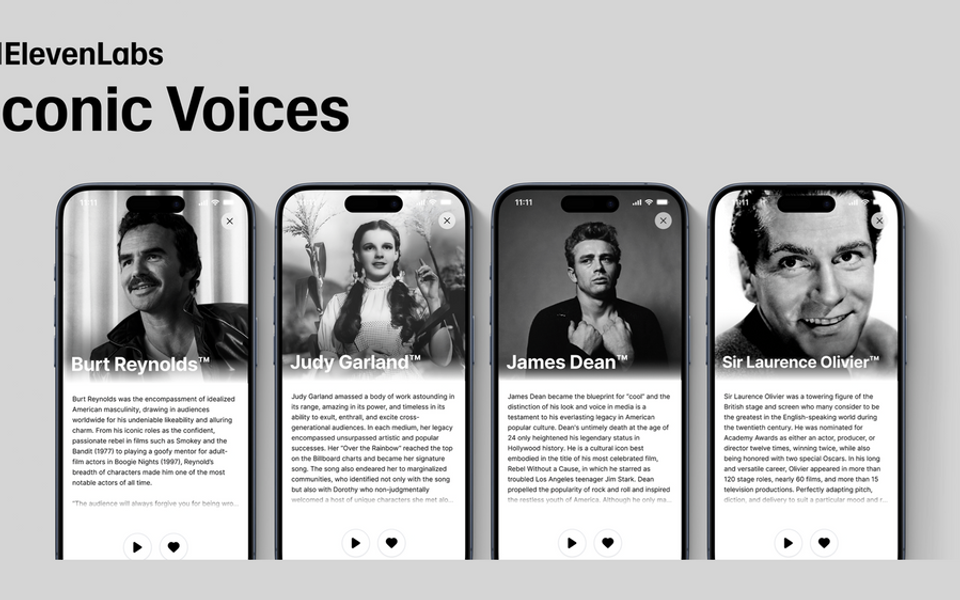
ElevenLabs’ 2024 addition of iconic voices to its Reader app remains useful because it shows a consent-based voice model. The company said it partnered with the estates of Judy Garland, James Dean, Burt Reynolds, and Sir Laurence Olivier, and limited those voices to personal streaming inside Reader rather than its broader creator library.
Why product boundaries matter
A licensed voice is not permission for every use. ElevenLabs drew a clear boundary: the iconic voices could narrate text for an individual listener inside Reader, but were not available for users to generate shareable content. That limit protects the estate agreement and reduces confusion about endorsement.
Five checks for synthetic voices
- Who authorized the voice: the living performer, an estate, or another rights holder?
- Which uses are allowed: private listening, commercial narration, advertising, music, or public sharing?
- Must the synthetic nature be disclosed?
- Can the voice be combined with political, sexual, defamatory, or deceptive content?
- How can consent be withdrawn and existing files handled?
Consent must be specific
A performer agreeing to one product does not authorize a model for every future service. Good agreements identify purpose, duration, territory, compensation, approval, security, and prohibited uses. The same logic applies to singers: permission to distribute a track is not automatically permission to clone the vocal identity.
Accessibility and cultural legacy
Synthetic narration can make articles and books easier to access and can introduce historic performers to new listeners. Those benefits are strongest when listeners know the voice is synthetic, the estate or performer approved it, and the product does not imply new personal statements by the deceased person.
Risks
Voice models can enable fraud, impersonation, false endorsement, and reputational harm. Platform safeguards help, but creators should not rely on technical detection alone. Preserve consent records, label material uses, restrict sensitive contexts, and maintain a reporting process.
Conclusion
Licensed AI voices can be responsible when consent, scope, compensation, disclosure, and enforcement are built into the product. The narrow Reader use is an important lesson: permission is valuable because it has boundaries.
Frequently asked questions
Can I use ElevenLabs’ iconic Reader voices in my own video? ElevenLabs said those voices were for individual streaming in Reader, not its shareable creator library.
Does an estate license make every use ethical? No. The product still needs clear scope, disclosure, and safeguards.
Should AI voices be labeled? Disclosure is a strong practice and may be required by a platform, contract, or law.
Sources and further reading
- ElevenLabs — Iconic Voices in ReaderEstate partnerships and product-use limits.
- U.S. Copyright Office — Digital Replicas reportPolicy context for unauthorized digital replicas.
- Spotify — AI protectionsMusic-platform approach to unauthorized vocal impersonation.