
news
Imogen Heap StyleFilters: Licensed Artist Style in Jen
How Jen’s Imogen Heap StyleFilters work, what licensed artist style means, current pricing, ownership claims, and questions creators should verify.
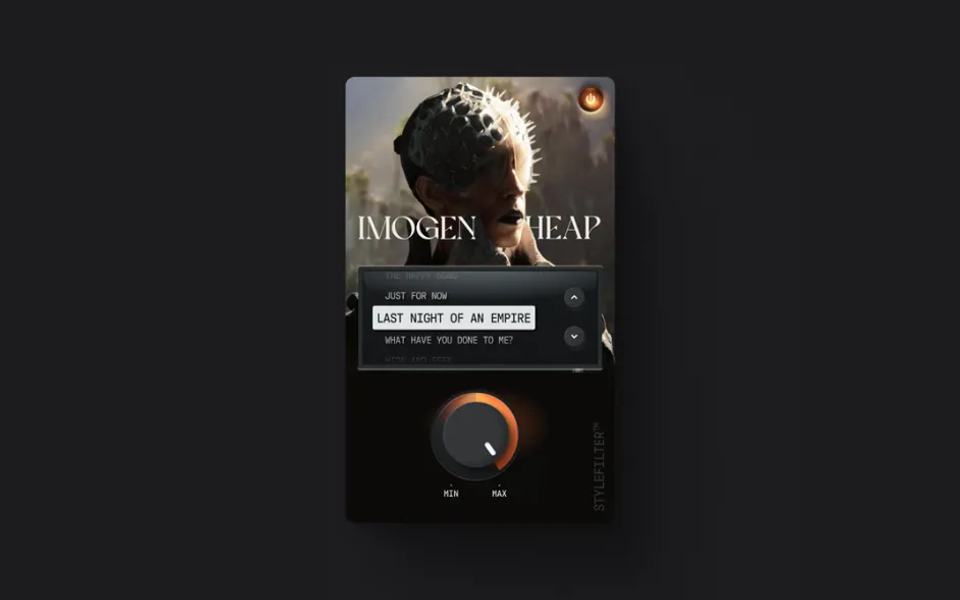
The most durable part of the original UNIFI and Imogen Heap roundup is now a live product: Jen’s StyleFilters marketplace offers filters connected to specific Imogen Heap tracks. Jen says each StyleFilter is built from fully licensed music and generates revenue for the artist whose work shapes the result.
How StyleFilters work
A user starts with a prompt and applies a filter associated with an artist and source track. Jen describes the process as infusing generated music with characteristics connected to that licensed work. The marketplace currently lists several Imogen Heap filters, including Goodnight and Go, Headlock, Just for Now, Last Night of an Empire, and What Have You Done to Me.
This is different from typing “in the style of” an artist into an unlicensed system. The product explicitly identifies the participating artist and source track and links use to a paid marketplace.
Current pricing and rights claims
Jen currently lists time-based access beginning at $4.99 for 90 minutes of Low Jeneration or $7.99 for 90 minutes of High Jeneration on the featured filters. Prices can change. Jen says users fully own tracks created with StyleFilters for use and release, while prohibiting use of those tracks to train other AI models.
Creators should save the terms and receipt, confirm whether ownership includes every underlying element, and check distributor rules before release. “Fully owned” is strongest when the chain of licenses and restrictions is clearly documented.
What licensed style should prove
- The artist or rights holder expressly approved the source use.
- The product identifies what asset is licensed.
- Payment or revenue participation is defined.
- Outputs have clear commercial-use terms.
- Voice, name, likeness, composition, and master rights are not silently bundled together.
- Users can understand restrictions on training, resale, stems, and redistribution.
Creative limits
A licensed filter can provide texture and direction, but it does not make the user Imogen Heap. Strong work still needs an original concept, structure, performance, editing, sound design, and reason to exist. Use the filter as a constraint, then develop the result beyond the recognizable starting influence.
Where UNIFI fits
The original article also discussed UNIFI’s artist-management ambitions. Any AI management system should be assessed separately from a creation tool: who owns artist data, how recommendations are generated, whether decisions are explainable, and whether exports and account history remain portable.
Verdict
Jen’s StyleFilters are a meaningful experiment in licensed artist participation because consent and payment are visible in the product. The model is promising, but creators should still verify live terms and add substantial human direction. Ethical design is a chain of permissions and responsibilities, not a marketing adjective.
Frequently asked questions
Are Imogen Heap StyleFilters licensed? Jen says they are created from fully licensed tracks and generate revenue for the artist.
Do users own StyleFilter outputs? Jen currently says users fully own generated tracks, subject to a restriction against using them to train other AI models.
Is using a StyleFilter the same as collaborating with the artist? No. It is a licensed product associated with an artist’s work, not a personal co-writing credit.
Sources and further reading
- Jen — StyleFiltersCurrent licensing, ownership, pricing, and Imogen Heap filter listings.
- Jen — StyleFilter MarketplaceLive product listings and examples.
- U.S. Copyright Office — AI initiativeCopyright and digital-replica context.