guide
Is This Artist AI? A Practical Verification Checklist
Check whether a music artist uses AI through credits, platform labels, identity history, collaborators, real-world activity, and careful technical evidence.
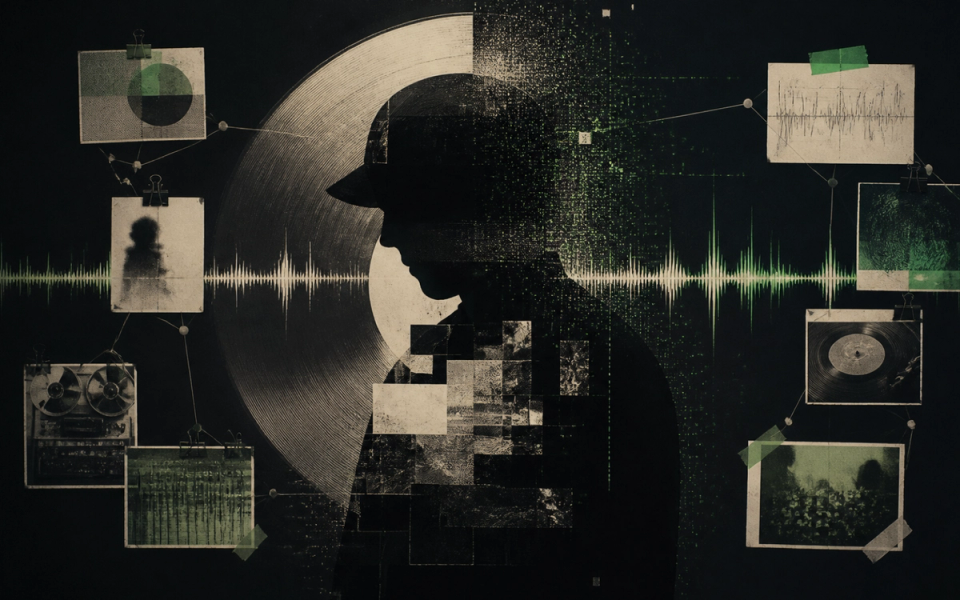
If you are asking “is this artist AI?”, one strange vocal, a polished profile picture, or an unusually fast release schedule cannot prove it. The most reliable answer comes from combining platform disclosures, credits, release history, real-world activity, creator statements, and—when available—technical analysis. Even then, the honest verdict may be “not enough evidence.”
This checklist is for listeners, playlist curators, journalists, and music teams who want to investigate without turning suspicion into an accusation. It separates an AI-assisted human artist from an AI persona, a virtual act, an anonymous studio project, and a fraudulent impersonation. Those are different situations and should not be collapsed into one label.
Key points
- Start with credits and platform disclosures, but remember that missing AI credits are not proof of human-only production.
- Check whether the artist identity has a coherent history across releases, collaborators, websites, interviews, performances, and rights information.
- Treat release volume, unusual artwork, vocal artifacts, and a small social presence as clues to investigate—not conclusions.
- Use an AI-music detector as secondary evidence and record its limitations, model, and date.
- Separate the person or project behind the artist from the production method used on one song.
- Publish only what the evidence supports. “Unverified” is a valid result.
Why one clue cannot tell you whether an artist is AI
Music production has always included editing, synthesis, pitch correction, sampling, virtual instruments, session musicians, fictional characters, and anonymous projects. Generative AI adds new methods, but it does not create a clean boundary between “human” and “AI.” A human singer can use generated accompaniment. A producer can write every note and use an AI-assisted mix. A virtual artist can be directed by a named human team. A real artist can also have a synthetic-looking cover or no public social account.
Listening alone is especially weak evidence. Generation models change, codecs alter audio, streaming applies compression, and conventional production can create many of the same textures people describe as “AI artifacts.” Repetitive lyrics or smeared backing vocals may justify a closer look, but they do not identify who made the song or which tool was used.
Doldur Music’s guide to how AI-generated music detection works explains why detectors can produce false positives, miss unfamiliar generators, or struggle with hybrid tracks. This checklist begins outside the waveform because identity and provenance are broader than audio classification.
Step 1: Check the platform’s labels, credits, and verification signals
Open the song credits and the artist profile before searching elsewhere. On Spotify, AI credits can describe AI involvement in lyrics, vocals, instrumentals, or production. The feature is optional, begins with participating distributors, and does not place a simple “AI track” label beside every song. The absence of a credit therefore means only that no visible disclosure is available through that field.
Spotify also has a separate artist-verification signal. A verification badge is evidence that the platform has reviewed an artist identity under its current process; it is not a certificate that every sound was made without AI. Likewise, an unverified profile is not automatically synthetic. New, inactive, niche, or not-yet-reviewed artists can lack a badge.
Other services may use different systems. Deezer labels albums containing tracks its system identifies as fully AI-generated. A platform label is useful evidence about that platform’s process, but it should be recorded precisely: album-level or track-level, voluntary or detected, fully generated or partly assisted.
Step 2: Trace the artist’s official identity
Look for an official website, label or distributor page, consistent profile links, and contact information. Then ask whether those surfaces point to one another. A convincing biography copied across empty profiles is weaker than a modest trail of independent, dated activity.
Useful identity evidence can include:
- an official domain that links to the same streaming profiles;
- dated interviews or press coverage with an attributable creator;
- a label catalogue with matching release identifiers;
- a public artist or management contact;
- songwriter, performer, producer, and engineer credits;
- documented concerts, sessions, rehearsals, or collaborations;
- older releases whose dates and credits form a coherent history.
Do not require every legitimate artist to tour, reveal a legal name, or maintain several social accounts. Electronic acts, studio projects, composers, disabled artists, anonymous performers, and artists in restricted environments may leave a small public footprint. The question is whether the available evidence agrees—not whether the artist performs publicity in one expected way.
Step 3: Compare credits across several releases
One song can be misleading. Review at least three releases when possible and record the credited songwriters, performers, producers, labels, publishers, and copyright lines. Consistent recurring contributors provide a stronger provenance trail than a profile with no credits at all.
Changes are not automatically suspicious. Artists change producers, genres, vocal approaches, and distributors. Instead, look for contradictions that need an explanation: incompatible creator claims, names that lead nowhere, credits copied from unrelated works, or a supposed live band with no identifiable members across a large catalogue.
Credits also help separate AI assistance from an AI persona. A human songwriter may openly use a generated vocal or instrumental while retaining a clear identity and authorship trail. That is different from a profile presenting a fictional person as an undisclosed human performer.
Step 4: Look for real-world creative activity
Performances, studio footage, rehearsals, interviews, and collaborator accounts can support an identity claim. Check dates and sources rather than counting clips. One reposted performance proves less than several independent records that match the artist’s catalogue and timeline.
For a studio-only artist, look for other forms of process evidence: session credits, production breakdowns, project files shown in context, songwriting demonstrations, or collaborators discussing the work. None is mandatory, but together they can show that a sustained creative practice exists behind the profile.
Reverse image search can help identify a stolen portrait or reused artwork, but an AI-generated cover does not prove the music is generated. Visual and musical production decisions must be assessed separately.
Step 5: Treat release patterns as context, not proof
A new album every week, dozens of stylistically unrelated tracks, or near-identical metadata may indicate automation or catalogue spam. They may also reflect archival releases, production libraries, meditation music, DJ tools, public-domain recordings, collaborative labels, or an older catalogue arriving on a new service.
Record the pattern without converting it into a verdict. Useful questions include:
- Did the catalogue appear all at once or grow over time?
- Are the copyright and label lines consistent?
- Do titles, artwork, descriptions, and credits repeat mechanically?
- Does the supposed biography fit the volume and range of releases?
- Are several artist profiles sharing the same assets or contributors?
The pattern tells you where to investigate next. It does not establish which model, if any, produced the audio.
Step 6: Use technical detectors carefully
If you have lawful access to the audio file, a detector can add one evidence point. Record the exact file, service, date, result, and confidence score. If possible, compare more than one detector and include known human and known generated controls in the same format.
Do not upload confidential, unreleased, client-owned, or copyrighted audio without permission. Read the detector’s retention and training terms first. A result from a streamed transcode may also differ from a lossless source because encoding changes the signal.
Most importantly, a detector result addresses audio characteristics, not the artist’s complete identity. It cannot tell you who wrote the lyrics, whether a singer consented, how much a human edited the output, or whether the profile is impersonating someone.
Step 7: Ask the creator a neutral, specific question
When the answer matters, contact the artist, label, distributor, or manager. Avoid “Are you fake?” Ask which parts of the release used generative tools, who performed the vocals, where the credits can be verified, or whether a platform label is accurate.
A clear disclosure can resolve uncertainty. No response does not prove deception; independent artists often cannot answer every message. Preserve the question, date, and any attributable response if you plan to report the result.
Step 8: Write an evidence-based verdict
Use a simple evidence ledger:
Finding
What it supports
What it does not prove
Optional AI credit is visible
A disclosed AI role on that song
That the whole song or artist is generated
Verified artist badge
Platform-reviewed artist identity
Human-only production on every release
Coherent credits and collaborators
A traceable creative network
Absence of AI assistance
Detector score
A model’s estimate about the tested file
Identity, consent, authorship, or fraud
No public social presence
A limited public footprint
A fictional or generated artist
Choose wording that matches the strongest evidence: “the artist discloses AI-assisted production,” “the platform labels this album as containing fully generated tracks,” “the project presents a fictional AI artist under named human direction,” or “we could not verify the production method.” Avoid broader labels than the facts support.
AI artist, virtual artist, and AI-assisted artist are not synonyms
An AI-assisted artist is a human creator or established project using AI for a defined part of the workflow. An AI artist identity is a character or act whose public identity and music are intentionally developed with generative systems under human direction. A virtual artist can be fictional without using generative AI. Impersonation presents another person’s identity or voice without authorization. Catalogue spam describes upload behavior, not necessarily the method used to make one song.
Doldur Music publicly identifies the artists it develops as AI artist identities under human creative direction. That disclosure appears on artist pages instead of asking listeners to infer the production method from an image or vocal texture. The Doldur Music artist catalogue shows how a project can be transparent about an AI identity while still naming the organization and creative responsibility behind it.
Frequently asked questions
Does a Spotify AI credit mean the whole song is AI-generated?
No. The credit can identify AI use in a specific role such as lyrics, vocals, instrumentals, or production. Read the role instead of turning the credit into an all-or-nothing label.
Does no AI credit mean a song was made entirely by humans?
No. Spotify says participation is optional and initially limited to certain distributors. Missing disclosure is missing evidence, not proof of a human-only process.
Can an AI detector identify an AI artist?
A detector may estimate whether a tested audio file contains patterns associated with generation. It cannot establish the artist’s identity, consent, credits, or full creative process.
Is a high release volume proof of AI music?
No. It can be a reason to examine the catalogue, but archives, libraries, collaborations, and high-output genres can also produce frequent releases.
Should a playlist remove an artist when the evidence is uncertain?
That depends on the playlist’s published policy. Apply the same evidence standard to every artist, preserve the record, and label uncertainty instead of presenting suspicion as fact.
Verify the claim, not the stereotype
The best way to check whether an artist is AI is to combine disclosures, credits, identity history, real-world evidence, technical analysis, and a direct question. No single clue carries the whole answer. A careful investigation may confirm human work, disclosed AI assistance, an AI persona, or unresolved uncertainty. Each is more useful—and fairer—than guessing from the sound alone.
Sources and further reading
- Spotify AI CreditsAI-credit roles, mobile beta visibility, optional participation, and the limits of missing credits.
- Verified by SpotifyCurrent artist verification rollout, eligibility, human review, and limits of a missing badge.
- Deezer AI Tagging SystemAlbum-level labels for releases containing fully AI-generated tracks.
- AP: How to Check if a Song Was Generated by AIIndependent reporting on identity checks, platform tags, detector errors, and the lack of a foolproof listening test.