
analysis
AI Music Platforms in 2026: Creation, Licensing, and Fans
AI music platforms now span creation, licensed fan remixes, rights management, and artist protection. Here is what independent artists should verify in 2026.
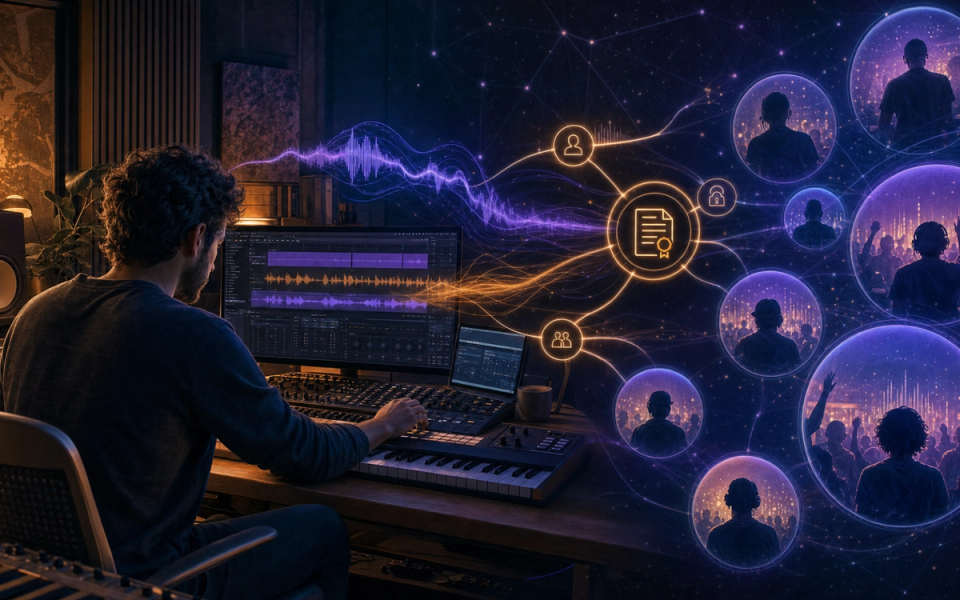
AI music platforms are no longer just prompt boxes that generate a finished song. In 2026, the category includes creator workspaces, audio-analysis systems, rights marketplaces, streaming protections, and licensed tools that let fans reshape existing music. That shift matters because the important question for an artist is no longer simply whether a tool uses AI. It is who controls the source material, who approves each use, how credit travels with the output, and who gets paid.
- HitCraft now presents AI as part of an end-to-end creator workflow rather than an automatic replacement for musicians.
- Spotify is developing licensed fan-made covers and remixes around consent, credit, and compensation.
- Platforms are also adding defenses against impersonation, spam, misattribution, and unclear AI use.
- Independent artists should judge AI products by contractual control and traceable rights, not by the quality of a demo alone.
What changed since this article was first published
The original November 2024 article grouped five loosely connected stories: HitCraft’s coming beta, AI licensing, Spotify’s interest in superfans, Gabb Music, and the familiar question of whether AI would replace artists. The core instinct was useful, but several statements were speculative and the roundup did not give musicians a decision framework.
By July 2026, the market offers better evidence. HitCraft is available as a creator app. Spotify has announced label partnerships, new AI protections, artist-verification work, and a licensed remix initiative. BandLab has opened a path for rights holders to signal interest in AI-training licenses. The U.S. Copyright Office has also clarified that AI assistance does not automatically prevent copyright protection, while purely AI-generated material and prompts alone generally do not establish human authorship.
For the broader market context, see Doldur Music’s updated AI music trends analysis.
HitCraft shows how AI music platforms are becoming workspaces
HitCraft’s current product description is much broader than the beta promise reported in 2024. It positions the app as a personalized assistant for songwriting, production, release planning, distribution, press materials, and audience strategy. Its App Store listing says recommendations can incorporate an artist’s genre, earlier releases, streaming data, vocal range, and fanbase.
A Music AI case study adds a less visible part of that workflow: automated analysis and tagging of user-generated audio. HitCraft reportedly uses modules for tasks that would otherwise require large-scale manual listening and metadata work. This is a practical example of AI assisting with organization and retrieval, not only generating melodies or vocals.
The benefit for an independent artist is continuity. Ideas, demos, metadata, release assets, and planning can remain in one environment. The tradeoff is data concentration. A personalized assistant may need access to recordings, performance data, catalog information, or audience signals. Artists should therefore inspect what is uploaded, how long it is retained, whether it is used to improve models, and whether exports remain usable outside the product.
Creators comparing idea-generation workflows can also read the AudioCipher text-to-MIDI review.
Spotify’s licensed AI model turns creation into a fan product
Spotify’s most important 2026 move is not a general-purpose song generator. In May, Spotify and Universal Music Group announced agreements for a future tool that would let users create covers and remixes from participating artists and songwriters. Spotify says the system is being built around consent, credit, compensation, and direct participation by rights holders.
That is a different product model from generating a track in the style of an artist and asking legal questions later. The permitted catalog is defined in advance, participation is limited, and the derivative fan experience is designed as a monetized service. Spotify has not announced every operational detail or a public launch date, so claims about the final interface, revenue split, or availability would be premature.
For artists, the potential advantage is a new layer between passive streaming and traditional merchandise or ticket sales. A fan who makes an authorized remix is interacting with the music, not merely replaying it. The risk is that participation could be negotiated at catalog or label level while individual creators have limited visibility into the economics. The words “opt in” only become meaningful when the agreement identifies who can approve use, which rights are covered, how long permission lasts, and whether it can be withdrawn.
Licensing is becoming part of the product architecture
Earlier AI music debates often treated licensing as a dispute to resolve after a model or feature existed. The newer products treat permission as a feature. Spotify says it is developing artist-first AI products with major labels, Merlin, and Believe. BandLab Licensing lets artists and rights holders mark music as open to potential AI-training deals, while requiring explicit approval for each opportunity.
These systems address different rights. Training a model on a recording is not the same transaction as licensing a composition, cloning a voice, distributing a generated master, or authorizing a fan remix. A platform can describe itself as licensed while leaving one of those layers unclear. Artists should ask which assets are covered: the sound recording, musical work, lyrics, performance, name, image, likeness, voice, or some combination.
Copyrightability creates another layer. The U.S. Copyright Office’s January 2025 report says purely AI-generated material is not protected by copyright in the United States, but human-authored expression, creative selection and arrangement, or meaningful modification may be protected. Using AI as an assistive tool does not disqualify the wider work. This is not individualized legal advice, and other countries may apply different standards, but it gives creators a reason to preserve session files, drafts, stems, MIDI, notes, and edit histories that show their human contribution.
Rights also matter when transforming existing audio. Doldur Music’s AI stem-separation guide explains why technical access to isolated parts does not create permission to reuse them.
Spotify is building protections alongside AI products
A licensed remix tool does not solve the wider problem of low-quality uploads, impersonation, or music being delivered to the wrong artist page. Spotify’s September 2025 policy update separated permitted AI assistance from abuse. It strengthened rules around unauthorized vocal impersonation, described spam tactics that can divert attention or royalties, and supported more detailed AI disclosures through music credits.
By April 2026, Spotify had also announced a reviewed “Verified by Spotify” badge and connected it to features including expanded credits, AI credits, SongDNA, and Artist Profile Protection. At launch, profiles that appear mainly to represent AI-generated or AI-persona artists are not eligible for verification. Artist Profile Protection is intended to give creators more control over releases appearing under their identity.
These are useful safeguards, but they are not a blanket certification that every credited person, dataset, or model has been independently audited. Disclosure also depends on accurate information entering the distribution chain. Artists still need to monitor profiles, check credits after delivery, keep ownership records, and report suspicious releases quickly.
How independent artists should evaluate AI music platforms
The following six checks are more useful than asking whether a platform is simply pro-AI or anti-AI.
1. Identify the exact creative task
Separate assistance from generation. Tagging a catalog, suggesting chords, splitting stems, generating MIDI, cloning a voice, and producing a finished master create different artistic and legal risks. Choose the narrowest tool that solves the actual problem.
2. Map every input and output right
List what you provide and what the platform produces. Confirm whether you control the composition, master, performance, artwork, voice, and any samples. Then read the terms for model training, sublicensing, promotional use, and retention.
3. Test whether consent is granular
A useful consent mechanism identifies the work, use, territory, duration, participating parties, payment basis, and withdrawal process. A general account-level checkbox is weaker than approval for a specific training or remix opportunity.
4. Preserve evidence of human authorship
Keep DAW sessions, version history, prompts, recorded performances, arrangements, MIDI, stems, and notes. The goal is not paperwork for its own sake; it is a record of which expressive decisions came from the artist.
5. Confirm metadata survives distribution
Check writer, producer, performer, ISRC, composition, and AI-use information after delivery. A platform may support detailed credits, but an incomplete distributor feed can still produce incomplete public data.
6. Measure fan value instead of content volume
The strongest superfan concept creates a reason for a listener to spend time or money with a specific artist. More automated tracks do not automatically create stronger relationships. Measure saves, repeat listeners, direct sign-ups, qualified fan actions, and revenue—not only the number of assets generated.
What remains uncertain in 2026
Important details remain unresolved. Spotify has not disclosed a launch date, complete catalog scope, or artist-level economics for its UMG remix tool. Verification and disclosure systems are evolving. Licensing marketplaces still need enough willing rights holders and buyers to create meaningful income. Laws governing digital replicas, model training, and AI-generated outputs also differ across jurisdictions and continue to change.
That uncertainty is a reason to run limited, reversible experiments. Start with non-exclusive material, keep source files, export often, avoid uploading collaborators’ work without permission, and do not promise fans or clients rights that the platform has not clearly granted.
The practical conclusion
AI music platforms are moving toward two connected roles: assisting artists across the production and release workflow, and creating licensed interactive experiences for fans. The dividing line is not human versus machine. It is accountable versus unaccountable use. Artists should favor systems that make permission specific, credit visible, compensation traceable, and creative control reversible.
Frequently asked questions
What is an AI music platform?
It is a service that uses machine learning in music creation, analysis, organization, distribution, licensing, discovery, or fan interaction. The label covers much more than text-to-song generators.
Does Spotify allow AI-generated music?
Spotify says AI use is not inherently prohibited, but music must comply with its policies. Unauthorized impersonation, deceptive practices, spam, and other abuse can violate those rules. Distribution partners may impose additional requirements.
Will Spotify let fans make AI remixes?
Spotify and UMG announced a licensed tool for fan-made covers and remixes using music from participating artists and songwriters. As of July 19, 2026, Spotify had not announced a public launch date or all product details.
Can an artist copyright AI-assisted music?
In the United States, human-authored elements and sufficiently creative human selection, arrangement, or modification may qualify for protection. Purely AI-generated material is not protected, and prompts alone generally do not establish authorship. Get legal advice for a specific release or jurisdiction.
What should artists check before uploading music to an AI tool?
Check ownership, collaborator permission, training rights, retention, confidentiality, commercial-use terms, export formats, credit requirements, and the process for deleting data or withdrawing consent.
Sources and further reading
- HitCraft — Music Creators AI (Apple App Store)Current product description and creator-workflow claims; accessed July 19, 2026.
- Music AI — HitCraft case studyHitCraft audio-analysis and tagging implementation; accessed July 19, 2026.
- Spotify — AI protections for artists, songwriters, and producersImpersonation, spam, AI disclosure, and artist-profile protection policies.
- Spotify — Artist-first AI music collaborationSpotify principles for licensed, opt-in AI products.
- Spotify and UMG — Licensing agreements for fan-made covers and remixesLicensed AI-enabled superfan tool and compensation model.
- Spotify — Verified by SpotifyArtist authenticity, AI credits, SongDNA, and profile-protection context.
- BandLab Technologies — AI training licensing platformIndependent-artist opt-in licensing model and explicit approval requirement.
- U.S. Copyright Office — Copyright and Artificial Intelligence, Part 2Copyrightability of AI-assisted and AI-generated outputs in the United States.