guide
ElevenLabs Music API Tutorial: Generate a Structured Track
Design a structured Music API request with ordered sections, validation, retries, asset records, and a human review gate.
Affiliate disclosure: This article contains an ElevenLabs referral link. If you create an account through it, Doldur Music may earn a commission at no extra cost to you. #ad #ElevenAPIPartner
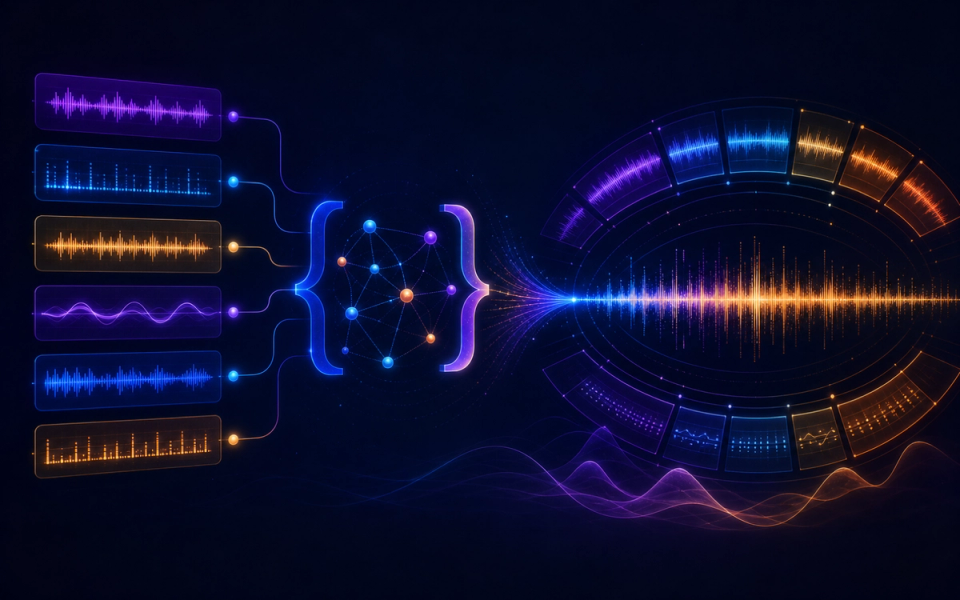
An ElevenLabs Music API integration should begin with a composition model and operational safeguards, not a copied request snippet. Endpoints, model names, parameters, and limits can change, so exact syntax belongs to the current official documentation. The durable part is your system: validate a structured brief, build ordered sections, submit safely, record provenance, inspect the output, and require human approval before distribution.
The working target in this tutorial is a reviewable API-generated track whose request, composition plan, response, output, cost context, and approval state are traceable. It is deliberately narrow: a defined deliverable makes prompting, listening, and revision concrete. Product capabilities, access, pricing, and terms can change, so confirm volatile details in the official sources linked with this article before acting on them.
Key takeaways
- Define the application’s allowed music use cases and prohibited inputs.
- Represent purpose, global style, duration, and ordered sections in validated data.
- Give every section a name, duration, role, and musical instruction.
- Set timeouts, bounded retries, idempotency, storage, and error handling.
- Record model, parameters, prompt, terms context, output hash, and reviewer.
Plan the ElevenLabs Music API brief before generating
A brief is not a decoration added to a prompt. It is the agreement between the creative goal and the listening test. Write it in plain language that another person could evaluate. If an instruction cannot be heard, timed, or checked, either replace it with an observable attribute or label it as a preference rather than a requirement.
- Define the application’s allowed music use cases and prohibited inputs.
- Represent purpose, global style, duration, and ordered sections in validated data.
- Give every section a name, duration, role, and musical instruction.
- Set timeouts, bounded retries, idempotency, storage, and error handling.
- Record model, parameters, prompt, terms context, output hash, and reviewer.
- Keep generation separate from approval and external publication.
These choices also create a useful project record. Keep the prompt, output, account tier, generation date, product, settings, intended use, and terms reference together. This does not settle every rights question, but it prevents the common problem of finding a promising audio file later with no reliable provenance.
A practical ElevenLabs Music API prompt
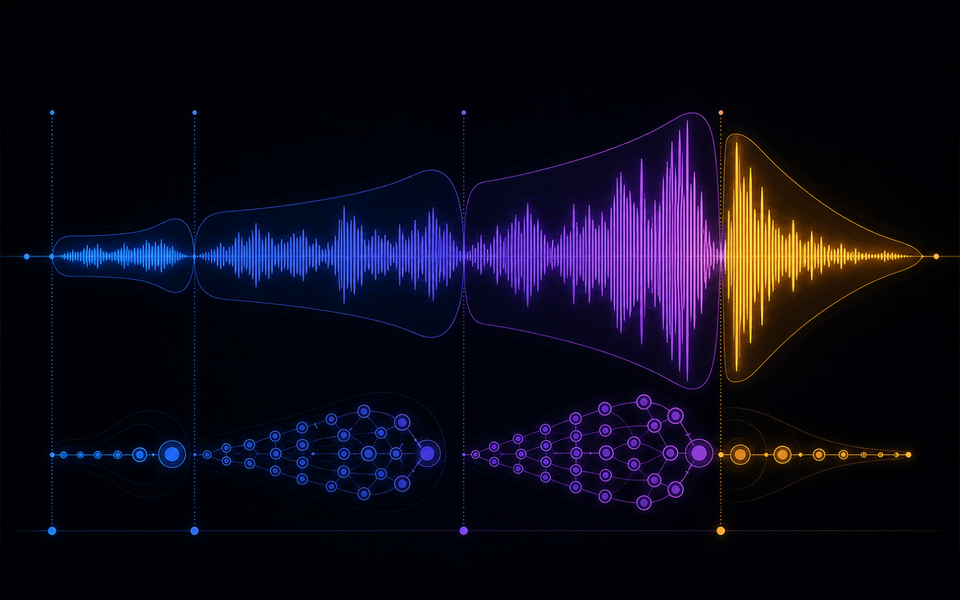
Composition intent: 90-second instrumental product walkthrough cue. Global palette: muted electronic percussion, warm bass, soft plucks, airy pad; no vocals. Ordered plan: 12-second sparse intro, 38-second steady explanation bed, 24-second gentle lift with added pulse, 16-second reduced outro ending on a clean button. Preserve motif and tempo across chunks.
Notice that the example describes function, movement, musical roles, and an ending. It does not claim that the generator will follow every instruction perfectly. Treat the first output as evidence about the brief: when a request is missed, decide whether the wording was ambiguous, the request was contradictory, or the current tool simply did not deliver it.
Before the next pass, write one sentence naming the most important difference between the intended result and the audio you heard. Link that sentence to one prompt change. This small habit protects the workflow from random regeneration and creates a clearer editorial record for the eventual case study.
The step-by-step ElevenLabs Music API workflow
Step 1: Model the request domain
Create a server-side schema for purpose, duration, style, sections, exclusions, and destination. Reject incomplete or prohibited input before calling the API. Make one decision at this stage, record it, and carry the result into the next step. That discipline makes later comparisons more useful because the project has a visible chain of intent.
Step 2: Build ordered composition chunks
Section durations should add up, jobs should be distinct, and adjacent instructions should share musical anchors. Make one decision at this stage, record it, and carry the result into the next step. That discipline makes later comparisons more useful because the project has a visible chain of intent.
Step 3: Read live API documentation
Use the current endpoint, authentication method, model identifier, payload shape, and limits directly from ElevenLabs. Make one decision at this stage, record it, and carry the result into the next step. That discipline makes later comparisons more useful because the project has a visible chain of intent.
Step 4: Submit with operational controls
Use secret management, reasonable timeouts, bounded retries, idempotent job records, and clear failure states. Make one decision at this stage, record it, and carry the result into the next step. That discipline makes later comparisons more useful because the project has a visible chain of intent.
Step 5: Store provenance with the asset
Keep request version, response identifiers, timestamps, account, model, parameters, terms reference, and content hash. Make one decision at this stage, record it, and carry the result into the next step. That discipline makes later comparisons more useful because the project has a visible chain of intent.
Step 6: Review before downstream use
Automated checks can confirm files and durations; a human must judge musical quality, appropriateness, rights, and release readiness. Make one decision at this stage, record it, and carry the result into the next step. That discipline makes later comparisons more useful because the project has a visible chain of intent.
How to review the result
Use the same checklist for every candidate. First listen from beginning to end without touching the controls. Then listen for the destination: under narration, against picture, inside gameplay, or as a standalone song draft. Context can reverse a judgment; an exciting standalone cue may be distracting under speech, while a restrained cue may perform its job extremely well.
- Schema validity: Required fields exist, durations are plausible, sections are ordered, and prohibited references are rejected.
- API resilience: Timeouts, rate limits, transient errors, duplicate submissions, and partial failures have explicit handling.
- Asset integrity: The received file decodes, matches expected format and duration, and has a stored checksum.
- Musical acceptance: A reviewer evaluates structure, continuity, artifacts, prompt fit, and destination fit.
- Governance: Secrets stay server-side, logs avoid sensitive input, terms are dated, and no output auto-publishes without approval.
Score each criterion with a short note rather than one overall number. The notes reveal trade-offs and give the next prompt a specific task. Save rejected versions long enough to compare them; otherwise novelty and recency can masquerade as improvement.
Evidence and limits of this guide
This tutorial is based on current official ElevenLabs product documentation and Music Terms, not a controlled performance benchmark. It explains a reproducible editorial workflow without claiming that every account, language, prompt, or output will behave identically. Product access, limits, pricing, and terms can change after publication.
Before releasing a project, save the prompt, output, account tier, generation date, product settings, intended use, and the terms you reviewed. Listen in the real destination and record at least one limitation. That project-specific evidence is more useful than treating any general tutorial as a guarantee.
If this workflow fits your project, Try ElevenLabs Music after checking the current product details and terms. The link is sponsored, but the review criteria above stay the same whether or not you open an account.
Common mistakes and focused fixes
Hard-coding a stale example
Link to current docs for syntax and keep your integration versioned and tested. Return to the brief, identify the smallest relevant variable, and compare the revision with the previous version in context.
Retrying every error blindly
Retry only transient failures, cap attempts, and prevent duplicate billable work. Return to the brief, identify the smallest relevant variable, and compare the revision with the previous version in context.
Putting keys in client code
Call the service from trusted server infrastructure and use managed secrets. Return to the brief, identify the smallest relevant variable, and compare the revision with the previous version in context.
Storing audio without provenance
An unlabeled file cannot support auditing, comparison, or rights review. Return to the brief, identify the smallest relevant variable, and compare the revision with the previous version in context.
Automating publication
Generation success is not editorial approval. Keep a human gate between output and release. Return to the brief, identify the smallest relevant variable, and compare the revision with the previous version in context.
Connect this workflow to a wider music practice
Generation is one part of a larger creative process. Compare this method with Doldur Music’s guide to AI music trends creators should watch, then explore how AI is changing music licensing. Before any public or commercial use, read our coverage of AudioCipher songwriting guide and verify the current controlling terms yourself.
Keep the human decisions visible: why the track exists, which references were translated into attributes, what was edited, who reviewed language or rights, and why the final version was selected. Those notes make the creative work easier to continue and the editorial claims easier to defend.
Frequently asked questions
Does ElevenLabs have a music API?
ElevenLabs documents music generation through ElevenAPI. Consult the current official documentation for access, endpoints, models, parameters, and limits.
What is a music composition plan?
It is a structured representation of a track as ordered sections or chunks with durations and musical instructions.
Should my app generate composition plans automatically?
It can propose them, but validate duration, content, structure, and policy constraints before music generation.
Can an API-generated track publish automatically?
Technically possible does not mean editorially safe. Require human quality and rights approval before external distribution.
Conclusion
The strongest ElevenLabs Music API workflow is a loop of briefing, generating, listening, and focused revision. Define the destination, preserve evidence, judge the output in context, and verify rights close to release. If you want to test the process yourself, Try ElevenLabs Music; keep the prompt and result so your second pass is based on evidence rather than guesswork.
Sources and further reading
- ElevenLabs composition plans guideOfficial guide to ordered sections and composition-plan generation.
- ElevenLabs Music documentationCurrent product workflow and feature reference; recheck immediately before publication.
- ElevenLabs music product comparisonOfficial distinctions among ElevenMusic, ElevenCreative, and ElevenAPI.
- ElevenLabs Music TermsControlling usage and licensing terms; recheck immediately before publication.