guide
How to Prompt AI Music Without Copying an Artist
Replace artist-name prompting with a vocabulary of purpose, tempo, timbre, harmony, dynamics, structure, and original constraints.
Affiliate disclosure: This article contains an ElevenLabs referral link. If you create an account through it, Doldur Music may earn a commission at no extra cost to you. #ad #ElevenCreativePartner
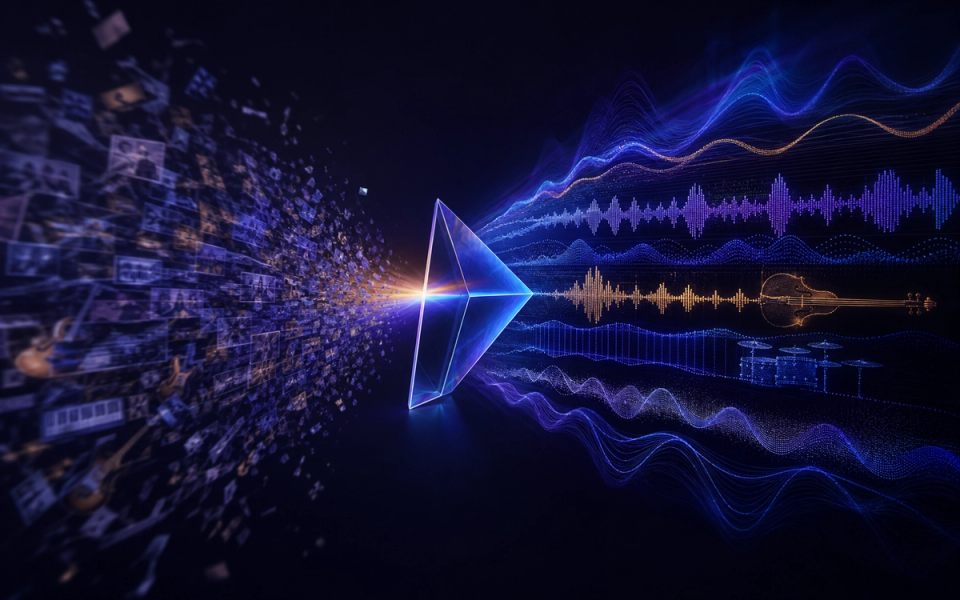
Ethical AI music prompts do not need artist names to be specific. A reference usually stands for several musical qualities: a tempo feel, instrument palette, harmonic language, vocal delivery, production texture, or structural habit. Identify those qualities, decide which actually serve your project, and combine them with an original purpose and arc. This produces a better brief while avoiding identity as a shortcut.
The working target in this tutorial is an original, testable music prompt built from audible attributes rather than an artist, song, album, or character identity. It is deliberately narrow: a defined deliverable makes prompting, listening, and revision concrete. Product capabilities, access, pricing, and terms can change, so confirm volatile details in the official sources linked with this article before acting on them.
Key takeaways
- Write why the reference appealed to you without naming it in the final prompt.
- Separate tempo, rhythm, harmony, timbre, dynamics, space, voice, and form.
- Choose only the attributes that serve the new project.
- Add a different purpose, narrative arc, palette combination, or structural constraint.
- Remove names, titles, lyric fragments, signature phrases, and identity cues.
Plan the ethical AI music prompts brief before generating
A brief is not a decoration added to a prompt. It is the agreement between the creative goal and the listening test. Write it in plain language that another person could evaluate. If an instruction cannot be heard, timed, or checked, either replace it with an observable attribute or label it as a preference rather than a requirement.
- Write why the reference appealed to you without naming it in the final prompt.
- Separate tempo, rhythm, harmony, timbre, dynamics, space, voice, and form.
- Choose only the attributes that serve the new project.
- Add a different purpose, narrative arc, palette combination, or structural constraint.
- Remove names, titles, lyric fragments, signature phrases, and identity cues.
- Review the current terms and test the result for unintended resemblance.
These choices also create a useful project record. Keep the prompt, output, account tier, generation date, product, settings, intended use, and terms reference together. This does not settle every rights question, but it prevents the common problem of finding a promising audio file later with no reliable provenance.
A practical ethical AI music prompts prompt
Create a 100-second nocturnal electronic-soul instrumental for a reflective city essay. Slow half-time pulse, close dry drums, suspended minor harmony, rounded sub-bass, one fragile electric-piano motif, and distant granular texture. Begin sparse, add harmonic tension in the middle, then resolve quietly. Intimate and spacious; no vocals, no recognizable melody, no artist imitation.
Notice that the example describes function, movement, musical roles, and an ending. It does not claim that the generator will follow every instruction perfectly. Treat the first output as evidence about the brief: when a request is missed, decide whether the wording was ambiguous, the request was contradictory, or the current tool simply did not deliver it.
Before the next pass, write one sentence naming the most important difference between the intended result and the audio you heard. Link that sentence to one prompt change. This small habit protects the workflow from random regeneration and creates a clearer editorial record for the eventual case study.
The step-by-step ethical AI music prompts workflow
Step 1: Interrogate the reference
Ask what you actually value: pocket, restraint, chord color, sound design, intimacy, arrangement, or emotional movement. Make one decision at this stage, record it, and carry the result into the next step. That discipline makes later comparisons more useful because the project has a visible chain of intent.
Step 2: Convert taste into attributes
Use musical and production vocabulary that can be heard without knowing the source identity. Make one decision at this stage, record it, and carry the result into the next step. That discipline makes later comparisons more useful because the project has a visible chain of intent.
Step 3: Select rather than clone
Take a few relevant dimensions and leave others behind. Copying the whole bundle recreates the shorthand problem. Make one decision at this stage, record it, and carry the result into the next step. That discipline makes later comparisons more useful because the project has a visible chain of intent.
Step 4: Add an original design constraint
A new context, unusual palette, structural rule, perspective, or performance limitation gives the work its own logic. Make one decision at this stage, record it, and carry the result into the next step. That discipline makes later comparisons more useful because the project has a visible chain of intent.
Step 5: Remove identity leakage
Check names, titles, lyric fragments, signature catchphrases, biographical cues, and disguised spellings. Make one decision at this stage, record it, and carry the result into the next step. That discipline makes later comparisons more useful because the project has a visible chain of intent.
Step 6: Review output, not just prompt
An attribute-based brief can still yield an uncomfortable resemblance. Listen critically and revise or discard when necessary. Make one decision at this stage, record it, and carry the result into the next step. That discipline makes later comparisons more useful because the project has a visible chain of intent.
How to review the result
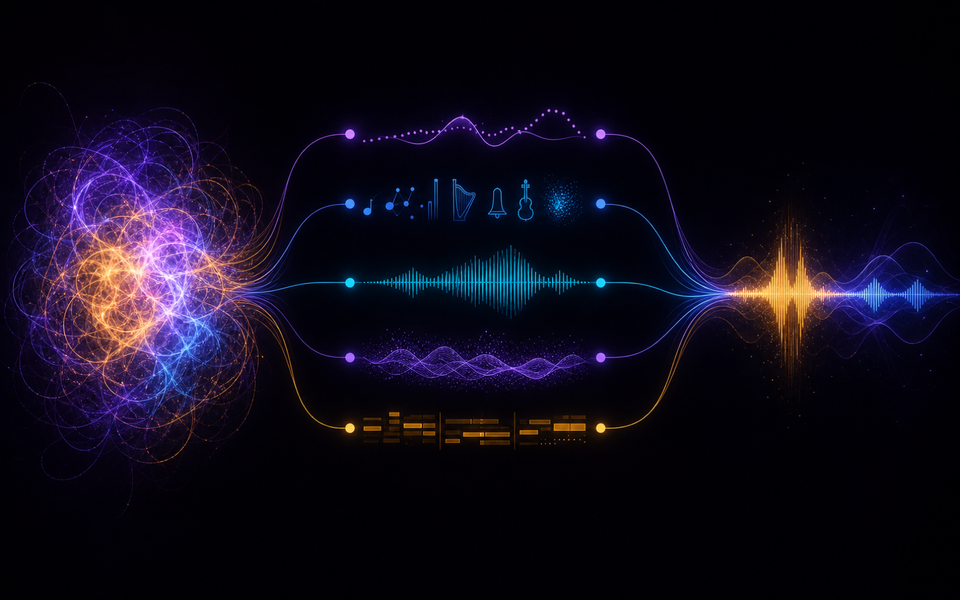
Use the same checklist for every candidate. First listen from beginning to end without touching the controls. Then listen for the destination: under narration, against picture, inside gameplay, or as a standalone song draft. Context can reverse a judgment; an exciting standalone cue may be distracting under speech, while a restrained cue may perform its job extremely well.
- No identity instruction: The prompt stands on its own without an artist, song, album, label, character, or deceptive synonym.
- Audible specificity: Tempo, rhythm, palette, harmony, dynamics, texture, structure, and purpose provide sufficient direction.
- Original combination: The selected attributes are reorganized around a new creative premise rather than recreating one source bundle.
- Output distance: Melody, phrasing, lyrics, arrangement, and sonic identity have been reviewed for unintended resemblance.
- Terms compliance: Inputs and intended use conform to the service’s current prohibited-use and music terms.
Score each criterion with a short note rather than one overall number. The notes reveal trade-offs and give the next prompt a specific task. Save rejected versions long enough to compare them; otherwise novelty and recency can masquerade as improvement.
Evidence and limits of this guide
This tutorial is based on current official ElevenLabs product documentation and Music Terms, not a controlled performance benchmark. It explains a reproducible editorial workflow without claiming that every account, language, prompt, or output will behave identically. Product access, limits, pricing, and terms can change after publication.
Before releasing a project, save the prompt, output, account tier, generation date, product settings, intended use, and the terms you reviewed. Listen in the real destination and record at least one limitation. That project-specific evidence is more useful than treating any general tutorial as a guarantee.
If this workflow fits your project, Try ElevenLabs Music after checking the current product details and terms. The link is sponsored, but the review criteria above stay the same whether or not you open an account.
Common mistakes and focused fixes
Using misspellings to evade filters
Evasion does not make the creative direction more original or responsible. Return to the brief, identify the smallest relevant variable, and compare the revision with the previous version in context.
Replacing a name with “in the style of” clues
A bundle of signature biography, era, titles, and traits can still point to one identity. Return to the brief, identify the smallest relevant variable, and compare the revision with the previous version in context.
Making the ethical prompt vague
Removing names should lead to better musical description, not “make a nice song.” Return to the brief, identify the smallest relevant variable, and compare the revision with the previous version in context.
Ignoring generated resemblance
Responsible review continues after prompting. Regenerate, edit, or discard concerning material. Return to the brief, identify the smallest relevant variable, and compare the revision with the previous version in context.
Calling originality guaranteed
No prompt formula guarantees a unique output. Keep records and use human judgment. Return to the brief, identify the smallest relevant variable, and compare the revision with the previous version in context.
Connect this workflow to a wider music practice
Generation is one part of a larger creative process. Compare this method with Doldur Music’s guide to AudioCipher songwriting guide, then explore how AI is changing music licensing. Before any public or commercial use, read our coverage of AI music trends creators should watch and verify the current controlling terms yourself.
Keep the human decisions visible: why the track exists, which references were translated into attributes, what was edited, who reviewed language or rights, and why the final version was selected. Those notes make the creative work easier to continue and the editorial claims easier to defend.
Frequently asked questions
Can I prompt AI music with an artist name?
Avoid it. Current services may restrict such prompts, and attribute-based descriptions provide more transparent creative control.
How do I describe a music style without naming an artist?
Describe tempo feel, groove, harmony, instrument roles, vocal qualities, dynamics, texture, space, structure, and project purpose.
Does removing the artist name guarantee originality?
No. Review the generated melody, lyrics, phrasing, arrangement, and sonic identity for unintended resemblance.
What makes an AI music prompt ethical?
It respects consent, identity, rights, current terms, and cultural context while directing original work through transparent musical attributes.
Conclusion
The strongest ethical AI music prompts workflow is a loop of briefing, generating, listening, and focused revision. Define the destination, preserve evidence, judge the output in context, and verify rights close to release. If you want to test the process yourself, Try ElevenLabs Music; keep the prompt and result so your second pass is based on evidence rather than guesswork.
Sources and further reading
- ElevenLabs Music TermsControlling usage and licensing terms; recheck immediately before publication.
- ElevenLabs Music documentationCurrent product workflow and feature reference; recheck immediately before publication.
- ElevenLabs: Introducing Music v2Official overview of Music v2 and its announced capabilities.