guide
ElevenMusic vs ElevenCreative vs ElevenAPI
Choose among ElevenMusic, ElevenCreative, and ElevenAPI by starting with your workflow—not an unsupported winner.
Affiliate disclosure: This article contains an ElevenLabs referral link. If you create an account through it, Doldur Music may earn a commission at no extra cost to you. #ad #ElevenCreativePartner #ElevenAPIPartner
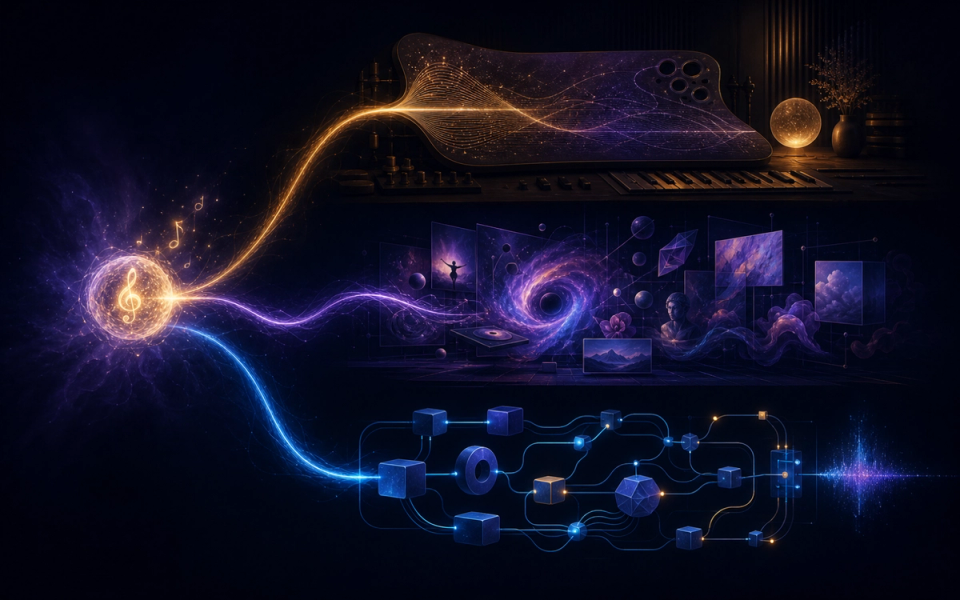
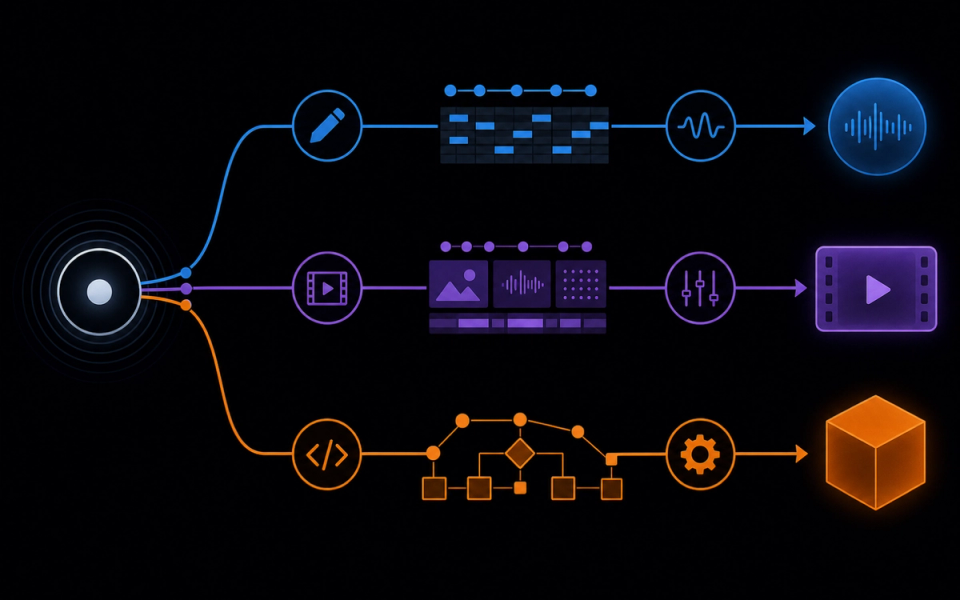
The ElevenLabs music platforms serve different working contexts. ElevenMusic centers music creation, ElevenCreative places music inside a broader creative environment, and ElevenAPI supports programmatic generation and integration. That distinction is more useful than declaring one “best.” Start with the task, the person operating the workflow, and the destination. Then confirm the current product boundaries and access in official documentation.
The working target in this tutorial is a defensible product choice based on one real project’s workflow, control, scale, and delivery requirements. It is deliberately narrow: a defined deliverable makes prompting, listening, and revision concrete. Product capabilities, access, pricing, and terms can change, so confirm volatile details in the official sources linked with this article before acting on them.
Key takeaways
- Describe whether the primary task is composing, assembling multimedia, or building software.
- Name the operator: individual creator, content team, or developer.
- List required controls, review points, and output formats.
- Estimate repetition, automation, and integration volume.
- Identify collaboration, governance, and account constraints.
Plan the ElevenLabs music platforms brief before generating
A brief is not a decoration added to a prompt. It is the agreement between the creative goal and the listening test. Write it in plain language that another person could evaluate. If an instruction cannot be heard, timed, or checked, either replace it with an observable attribute or label it as a preference rather than a requirement.
- Describe whether the primary task is composing, assembling multimedia, or building software.
- Name the operator: individual creator, content team, or developer.
- List required controls, review points, and output formats.
- Estimate repetition, automation, and integration volume.
- Identify collaboration, governance, and account constraints.
- Compare current access and terms without inferring quality from product positioning.
These choices also create a useful project record. Keep the prompt, output, account tier, generation date, product, settings, intended use, and terms reference together. This does not settle every rights question, but it prevents the common problem of finding a promising audio file later with no reliable provenance.
A practical ElevenLabs music platforms prompt
Decision brief: We need ten reviewed instrumental cues per month for narrated videos. A producer writes prompts and edits outputs; no end-user generation is required. The team values fast manual iteration and one workspace more than code automation. Compare the focused music and broader creative pathways, then verify current export and licensing details.
Notice that the example describes function, movement, musical roles, and an ending. It does not claim that the generator will follow every instruction perfectly. Treat the first output as evidence about the brief: when a request is missed, decide whether the wording was ambiguous, the request was contradictory, or the current tool simply did not deliver it.
Before the next pass, write one sentence naming the most important difference between the intended result and the audio you heard. Link that sentence to one prompt change. This small habit protects the workflow from random regeneration and creates a clearer editorial record for the eventual case study.
The step-by-step ElevenLabs music platforms workflow
Step 1: Choose ElevenMusic for a focused music task
Use the dedicated music pathway when direct composition and song-level iteration are the center of the work, subject to current availability. Make one decision at this stage, record it, and carry the result into the next step. That discipline makes later comparisons more useful because the project has a visible chain of intent.
Step 2: Choose ElevenCreative for a broader production flow
A creative workspace may fit teams combining music with other generated media and editorial tasks. Make one decision at this stage, record it, and carry the result into the next step. That discipline makes later comparisons more useful because the project has a visible chain of intent.
Step 3: Choose ElevenAPI for software integration
The API pathway fits repeatable programmatic requests, composition plans, product features, or automation built and maintained by developers. Make one decision at this stage, record it, and carry the result into the next step. That discipline makes later comparisons more useful because the project has a visible chain of intent.
Step 4: Compare control at the task level
Ask whether you need direct interactive edits, multi-asset assembly, structured requests, or application-side orchestration. Make one decision at this stage, record it, and carry the result into the next step. That discipline makes later comparisons more useful because the project has a visible chain of intent.
Step 5: Compare operational cost honestly
Include engineering, review, failed attempts, storage, versioning, and support—not only subscription or usage price. Make one decision at this stage, record it, and carry the result into the next step. That discipline makes later comparisons more useful because the project has a visible chain of intent.
Step 6: Run a matched pilot
Use the same brief and acceptance criteria where workflows overlap, and report when a comparison is not equivalent. Make one decision at this stage, record it, and carry the result into the next step. That discipline makes later comparisons more useful because the project has a visible chain of intent.
How to review the result
Use the same checklist for every candidate. First listen from beginning to end without touching the controls. Then listen for the destination: under narration, against picture, inside gameplay, or as a standalone song draft. Context can reverse a judgment; an exciting standalone cue may be distracting under speech, while a restrained cue may perform its job extremely well.
- Task fit: The chosen product centers the work the team performs most often.
- Operator fit: The interface or integration matches the skills and responsibilities of the actual user.
- Control fit: Required structure, editing, automation, and output handling are available and verified.
- Scale fit: The workflow remains manageable at expected volume, including review and exception handling.
- Terms fit: Current product-specific access, pricing, and rights support the intended deployment.
Score each criterion with a short note rather than one overall number. The notes reveal trade-offs and give the next prompt a specific task. Save rejected versions long enough to compare them; otherwise novelty and recency can masquerade as improvement.
Evidence and limits of this guide
This tutorial is based on current official ElevenLabs product documentation and Music Terms, not a controlled performance benchmark. It explains a reproducible editorial workflow without claiming that every account, language, prompt, or output will behave identically. Product access, limits, pricing, and terms can change after publication.
Before releasing a project, save the prompt, output, account tier, generation date, product settings, intended use, and the terms you reviewed. Listen in the real destination and record at least one limitation. That project-specific evidence is more useful than treating any general tutorial as a guarantee.
If this workflow fits your project, Try ElevenLabs Music after checking the current product details and terms. The link is sponsored, but the review criteria above stay the same whether or not you open an account.
Common mistakes and focused fixes
Ranking output quality without a matched test
Official positioning does not prove one product sounds better for every brief. Return to the brief, identify the smallest relevant variable, and compare the revision with the previous version in context.
Choosing an API to avoid workflow design
Automation multiplies both good and bad briefs; it does not remove review. Return to the brief, identify the smallest relevant variable, and compare the revision with the previous version in context.
Ignoring the operator
A technically capable product can still be wrong for the person doing daily work. Return to the brief, identify the smallest relevant variable, and compare the revision with the previous version in context.
Comparing volatile prices from memory
Verify current pricing and limits immediately before publication and purchasing. Return to the brief, identify the smallest relevant variable, and compare the revision with the previous version in context.
Treating products as permanent boxes
Features can move or expand. Link to official pages and date the comparison. Return to the brief, identify the smallest relevant variable, and compare the revision with the previous version in context.
Connect this workflow to a wider music practice
Generation is one part of a larger creative process. Compare this method with Doldur Music’s guide to AI music trends creators should watch, then explore AudioCipher songwriting guide. Before any public or commercial use, read our coverage of how AI is changing music licensing and verify the current controlling terms yourself.
Keep the human decisions visible: why the track exists, which references were translated into attributes, what was edited, who reviewed language or rights, and why the final version was selected. Those notes make the creative work easier to continue and the editorial claims easier to defend.
Frequently asked questions
What is the difference between ElevenMusic and ElevenCreative?
Officially, ElevenMusic is the focused music experience, while ElevenCreative is a broader creative workspace. Verify current features in ElevenLabs’ comparison and docs.
When should I use ElevenAPI for music?
Use an API when music generation belongs inside software, automation, or a repeatable developer-controlled pipeline.
Which ElevenLabs music product is best?
There is no universal winner. The right choice depends on task, operator, control, scale, integration, and current terms.
Can I use the same prompt across all three?
Some creative intent may transfer, but interfaces, parameters, and workflows differ. A matched pilot should document those differences.
Conclusion
The strongest ElevenLabs music platforms workflow is a loop of briefing, generating, listening, and focused revision. Define the destination, preserve evidence, judge the output in context, and verify rights close to release. If you want to test the process yourself, Try ElevenLabs Music; keep the prompt and result so your second pass is based on evidence rather than guesswork.
Sources and further reading
- ElevenLabs music product comparisonOfficial distinctions among ElevenMusic, ElevenCreative, and ElevenAPI.
- ElevenLabs Music documentationCurrent product workflow and feature reference; recheck immediately before publication.
- ElevenLabs composition plans guideOfficial guide to ordered sections and composition-plan generation.
- ElevenLabs Music TermsControlling usage and licensing terms; recheck immediately before publication.