guide
ElevenLabs Music Licensing Explained by Use Case
A use-case framework for reading ElevenLabs Music terms, documenting account context, and avoiding blanket rights claims.
Affiliate disclosure: This article contains an ElevenLabs referral link. If you create an account through it, Doldur Music may earn a commission at no extra cost to you. #ad #ElevenCreativePartner
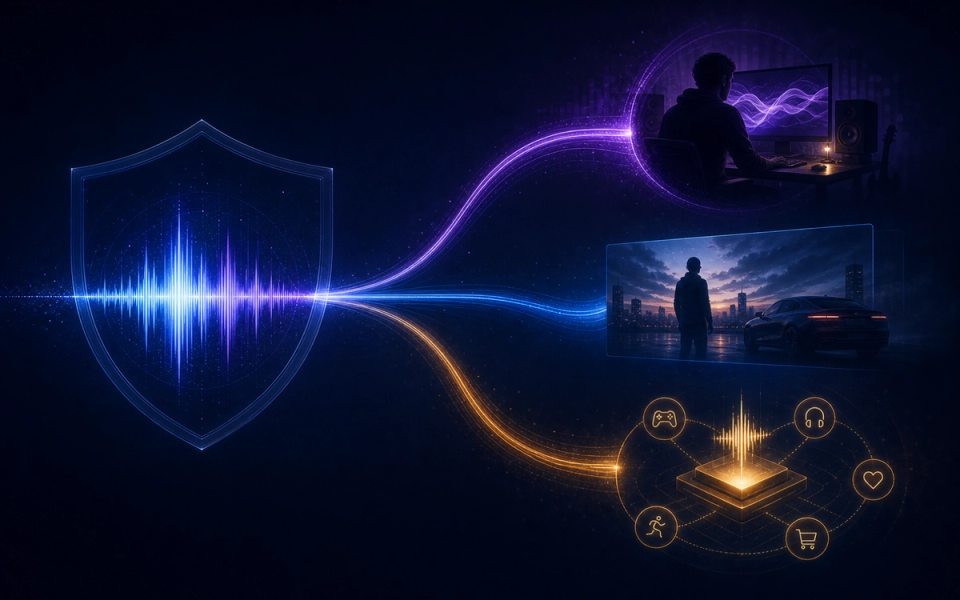
The ElevenLabs music license cannot be reduced safely to a single yes-or-no sentence for every creator. Rights depend on the controlling terms, account context, generation date, product, intended use, and sometimes the relationship among creator, client, and distributor. This article is an editorial reading framework, not legal advice. Use it to assemble the facts you need, then rely on the current Music Terms and qualified advice for consequential releases.
The working target in this tutorial is a written rights record that connects one generated track to one clearly described use case and the current terms. It is deliberately narrow: a defined deliverable makes prompting, listening, and revision concrete. Product capabilities, access, pricing, and terms can change, so confirm volatile details in the official sources linked with this article before acting on them.
Key takeaways
- Identify the exact ElevenLabs product and account used to generate the track.
- Record the plan and generation date before changing subscriptions.
- Describe personal, creator, commercial, client, advertising, API, or distribution use precisely.
- List every channel, territory, edit, sublicense, and collaborator involved.
- Save the controlling terms and relevant official documentation.
Plan the ElevenLabs music license brief before generating
A brief is not a decoration added to a prompt. It is the agreement between the creative goal and the listening test. Write it in plain language that another person could evaluate. If an instruction cannot be heard, timed, or checked, either replace it with an observable attribute or label it as a preference rather than a requirement.
- Identify the exact ElevenLabs product and account used to generate the track.
- Record the plan and generation date before changing subscriptions.
- Describe personal, creator, commercial, client, advertising, API, or distribution use precisely.
- List every channel, territory, edit, sublicense, and collaborator involved.
- Save the controlling terms and relevant official documentation.
- Escalate ambiguous or high-value uses to ElevenLabs support or qualified counsel.
These choices also create a useful project record. Keep the prompt, output, account tier, generation date, product, settings, intended use, and terms reference together. This does not settle every rights question, but it prevents the common problem of finding a promising audio file later with no reliable provenance.
A practical ElevenLabs music license prompt
Rights record example—not a legal conclusion: Track generated on [date] through [product] under [plan]. Intended use: background score in one monetized YouTube video and two promotional clips published by the same account. No resale as a standalone track. Terms URL and saved copy attached. Questions requiring confirmation: client transfer and paid media reuse.
Notice that the example describes function, movement, musical roles, and an ending. It does not claim that the generator will follow every instruction perfectly. Treat the first output as evidence about the brief: when a request is missed, decide whether the wording was ambiguous, the request was contradictory, or the current tool simply did not deliver it.
Before the next pass, write one sentence naming the most important difference between the intended result and the audio you heard. Link that sentence to one prompt change. This small habit protects the workflow from random regeneration and creates a clearer editorial record for the eventual case study.
The step-by-step ElevenLabs music license workflow
Step 1: Start with the controlling document
Marketing summaries are not a substitute for the current Music Terms. Note the effective date and definitions that apply. Make one decision at this stage, record it, and carry the result into the next step. That discipline makes later comparisons more useful because the project has a visible chain of intent.
Step 2: Identify account context
Free and paid access may not grant identical permissions. Record the plan at generation and at publication. Make one decision at this stage, record it, and carry the result into the next step. That discipline makes later comparisons more useful because the project has a visible chain of intent.
Step 3: Describe the actual use
“Commercial” is too broad. State platform, monetization, advertising, client, distribution, editing, and standalone availability. Make one decision at this stage, record it, and carry the result into the next step. That discipline makes later comparisons more useful because the project has a visible chain of intent.
Step 4: Trace every handoff
Clients, publishers, app users, collaborators, and distributors may receive or exploit the output. Document that chain. Make one decision at this stage, record it, and carry the result into the next step. That discipline makes later comparisons more useful because the project has a visible chain of intent.
Step 5: Separate ownership from permission
A license to use output, copyright eligibility, exclusivity, and protection from third-party claims are different questions. Make one decision at this stage, record it, and carry the result into the next step. That discipline makes later comparisons more useful because the project has a visible chain of intent.
Step 6: Recheck before launch
Terms and product details can change. Compare the saved generation record with current obligations immediately before release. Make one decision at this stage, record it, and carry the result into the next step. That discipline makes later comparisons more useful because the project has a visible chain of intent.
How to review the result
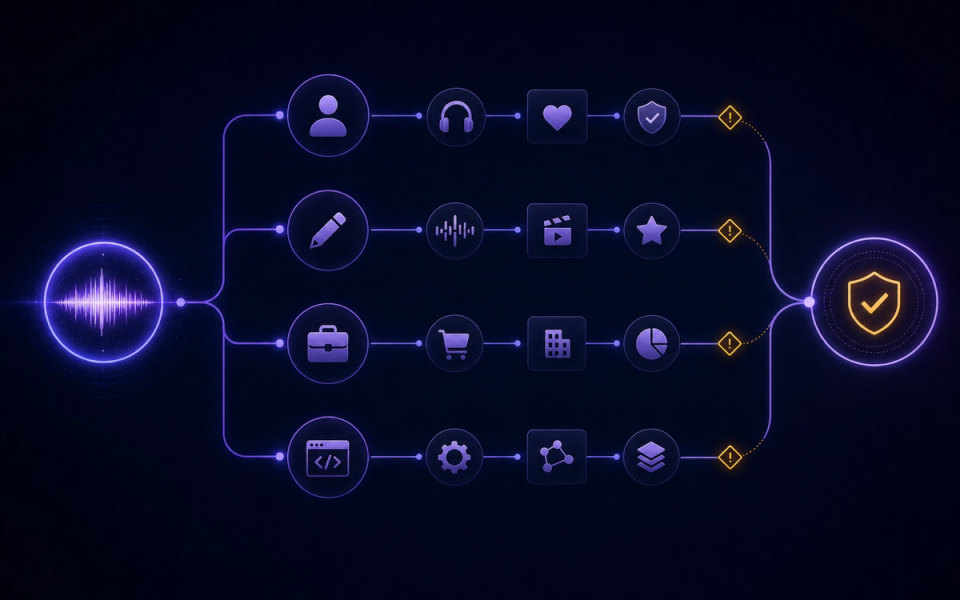
Use the same checklist for every candidate. First listen from beginning to end without touching the controls. Then listen for the destination: under narration, against picture, inside gameplay, or as a standalone song draft. Context can reverse a judgment; an exciting standalone cue may be distracting under speech, while a restrained cue may perform its job extremely well.
- Correct product: The rights review names ElevenMusic, ElevenCreative, or ElevenAPI accurately rather than treating them as interchangeable.
- Correct plan and date: The generation account, subscription tier, and relevant dates are recorded.
- Complete use map: Primary publication, paid promotion, client delivery, edits, redistribution, and soundtrack release are considered.
- No inflated language: The project avoids “copyright-free,” “risk-free,” or universal commercial-rights claims unless the controlling terms expressly support them.
- Escalation threshold: Ambiguity, material spend, sensitive content, or valuable distribution triggers professional confirmation.
Score each criterion with a short note rather than one overall number. The notes reveal trade-offs and give the next prompt a specific task. Save rejected versions long enough to compare them; otherwise novelty and recency can masquerade as improvement.
Evidence and limits of this guide
This tutorial is based on current official ElevenLabs product documentation and Music Terms, not a controlled performance benchmark. It explains a reproducible editorial workflow without claiming that every account, language, prompt, or output will behave identically. Product access, limits, pricing, and terms can change after publication.
Before releasing a project, save the prompt, output, account tier, generation date, product settings, intended use, and the terms you reviewed. Listen in the real destination and record at least one limitation. That project-specific evidence is more useful than treating any general tutorial as a guarantee.
If this workflow fits your project, Try ElevenLabs Music after checking the current product details and terms. The link is sponsored, but the review criteria above stay the same whether or not you open an account.
Common mistakes and focused fixes
Relying on a pricing card
Pricing summaries may omit definitions, restrictions, and obligations found in the controlling terms. Return to the brief, identify the smallest relevant variable, and compare the revision with the previous version in context.
Treating all commercial uses alike
A personal channel, client campaign, game, API product, and standalone catalog create different fact patterns. Return to the brief, identify the smallest relevant variable, and compare the revision with the previous version in context.
Assuming generated means exclusive
Generation does not itself establish copyright, exclusivity, or freedom from similar outputs. Return to the brief, identify the smallest relevant variable, and compare the revision with the previous version in context.
Losing the evidence
Keep prompt, output, account, date, product, and terms copy together. Return to the brief, identify the smallest relevant variable, and compare the revision with the previous version in context.
Publishing old licensing copy unchanged
Every scheduled article needs a final terms check close to its publication timestamp. Return to the brief, identify the smallest relevant variable, and compare the revision with the previous version in context.
Connect this workflow to a wider music practice
Generation is one part of a larger creative process. Compare this method with Doldur Music’s guide to how AI is changing music licensing, then explore Spotify and the growth of AI music. Before any public or commercial use, read our coverage of AI music trends creators should watch and verify the current controlling terms yourself.
Keep the human decisions visible: why the track exists, which references were translated into attributes, what was edited, who reviewed language or rights, and why the final version was selected. Those notes make the creative work easier to continue and the editorial claims easier to defend.
Frequently asked questions
Can I use ElevenLabs music commercially?
Eligibility depends on the current Music Terms, product, account plan, generation context, and exact use. Verify those facts before release.
Is ElevenLabs music copyright-free?
Do not use that blanket phrase. Permission under service terms and copyright status are separate issues.
Can I give ElevenLabs music to a client?
Client work raises transfer, sublicense, and distribution questions. Check the current terms and obtain clarification when the project is consequential.
Do I need to save the terms?
Keeping the applicable terms, date, plan, prompts, and outputs creates a useful audit trail if the project is reviewed later.
Conclusion
The strongest ElevenLabs music license workflow is a loop of briefing, generating, listening, and focused revision. Define the destination, preserve evidence, judge the output in context, and verify rights close to release. If you want to test the process yourself, Try ElevenLabs Music; keep the prompt and result so your second pass is based on evidence rather than guesswork.
Sources and further reading
- ElevenLabs Music TermsControlling usage and licensing terms; recheck immediately before publication.
- ElevenLabs Music documentationCurrent product workflow and feature reference; recheck immediately before publication.
- ElevenLabs music product comparisonOfficial distinctions among ElevenMusic, ElevenCreative, and ElevenAPI.