guide
How to Create a Music Producer Portfolio Website
Create a music producer portfolio website that shows selected projects, exact roles, useful context, services, and a clear route for suitable clients.
Disclosure: Doldur Music may earn a commission if you sign up for Promake through links in this article, at no additional cost to you. We describe only features we could verify from current public information.
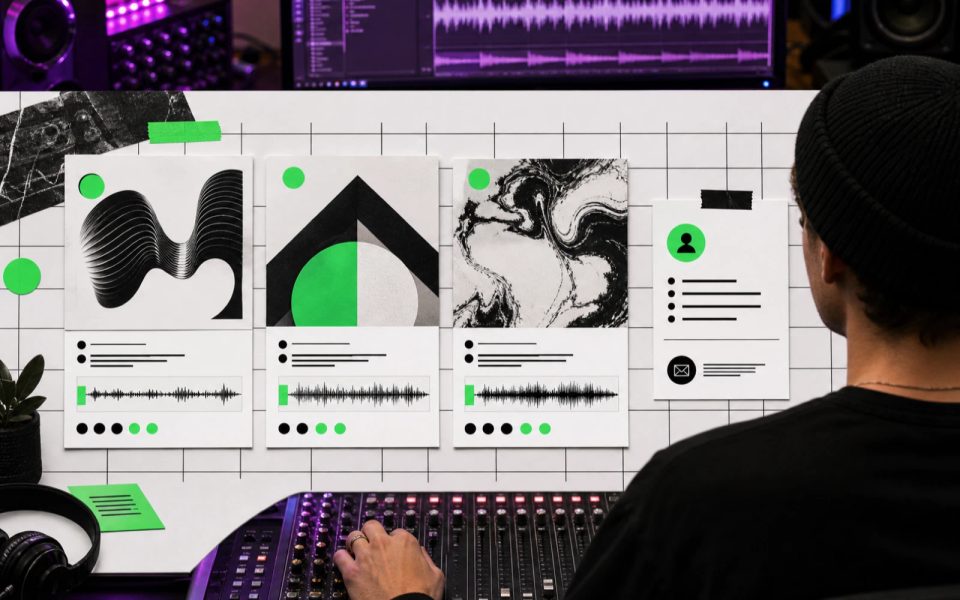
A music producer portfolio website should help a potential client answer three questions: Is this producer right for my project? What did they actually do on the work I am hearing? How do I start a useful conversation?
That requires selection and context, not a wall of embedded tracks. Choose a small number of projects that represent the work you want next. State your role precisely, explain the brief or challenge, use approved media, and make contact easy.
Key points
- Choose portfolio projects for the clients you want, not only for prestige.
- State whether you produced, composed, arranged, recorded, edited, mixed, or mastered each project.
- Explain enough project context for a listener to understand the contribution.
- Use only approved audio, artwork, credits, quotes, and client names.
- Present services in concrete terms and show what information a new enquiry should include.
- Review the site on a phone as if you had never heard of the producer.
Define the target client first
A producer working with independent vocalists needs a different portfolio from a composer pitching to game studios or a mix engineer seeking label work.
Write down the next client type and their immediate decision:
- Independent artist: Does this producer understand my sound and help finish records?
- Band: Can they record or shape live performance without losing identity?
- Film team: Can they deliver music for narrative, timing, revisions, and rights requirements?
- Game studio: Can they write adaptable material and work inside a production pipeline?
- Agency: Can they respond to a brief, communicate clearly, and deliver approved formats?
- Label or manager: Do the credits, sound, process, and availability fit the project?
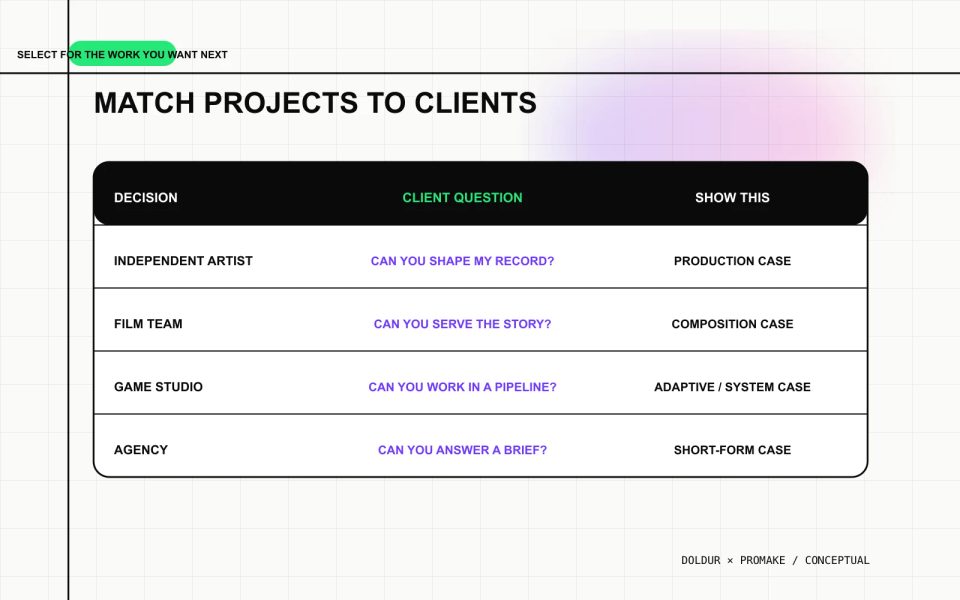
One producer may serve several groups. The homepage should still establish a primary fit. Secondary services can have their own sections or pages when the evidence is different.
Select fewer, more relevant projects
Three to six well-explained projects can be stronger than twenty unexplained covers. Selection lets a potential client hear a pattern and understand range without searching.
Use these criteria:
- The producer had a meaningful, accurately described role.
- The work is approved for portfolio use.
- The project represents a service the producer wants to offer again.
- The media is available in a stable, usable format.
- The credit and collaborators can be named correctly.
- The set shows enough range without looking random.
Do not add an old project only because the artist is recognizable. Do not hide the producer’s role behind “worked with.” A famous name with unclear contribution can create more doubt than a smaller project with precise context.
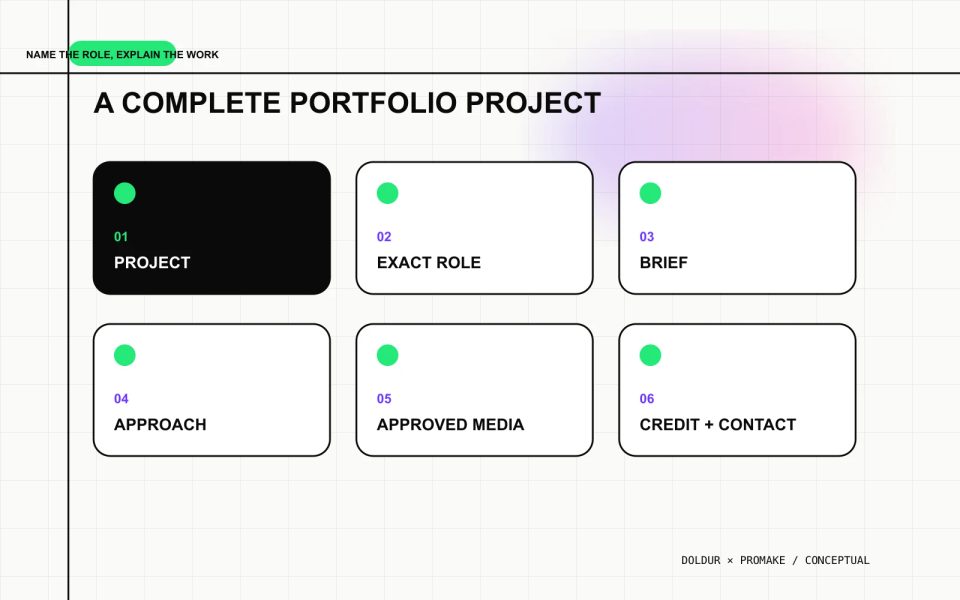
Write a complete project card
Every selected project should function as a compact case record.
Include:
- artist or client;
- project title and type;
- year when relevant;
- the producer’s exact role;
- the original brief or creative need;
- a short description of the approach;
- approved audio, video, or still image;
- named collaborators and credits;
- a link to the official release or project;
- a related service or contact action.
Keep the explanation concrete. For example:
Role: production and vocal arrangement. The artist arrived with a piano demo and wanted the final recording to keep its close, room-sized feeling. The arrangement stayed sparse, with processed room percussion and stacked final-chorus vocals.
This tells a potential client what the producer contributed without claiming that the production caused streams, press, or commercial results.
State credits and roles accurately
Music credits carry professional and legal weight. Check the approved release credits, contract, metadata sheet, or client confirmation before publishing.
Use specific roles where they apply:
- producer;
- co-producer;
- executive producer;
- composer;
- songwriter;
- arranger;
- vocal producer;
- recording engineer;
- editor;
- mixing engineer;
- mastering engineer;
- musician or programmer.
Do not collapse a team credit into a sole credit. Do not claim composition for sound design, production for mixing, or mastering for final mix processing. If a role is disputed or not documented, resolve it before publication.
Build a useful showreel
A showreel can help when the work is visual, the projects are short-form, or a client needs a quick impression. It should not replace the project cards that explain roles.
Keep it focused:
- open with representative work;
- group similar services when possible;
- identify projects and roles in accompanying HTML text;
- use only media cleared for the reel;
- avoid a long animated introduction;
- provide a way to hear full approved examples.
For music-only work, a short playlist may be more appropriate. Label each track and keep the page from auto-playing audio. Give the visitor control.
Describe services without vague promises
Service copy should explain the work, fit, and starting point.
Instead of “professional production solutions for every artist,” write:
- production for singer-songwriters moving from demo to release;
- vocal production and arrangement for remote sessions;
- mixing for electronic and alternative pop;
- original composition and edit delivery for short-form film;
- recording support for small live ensembles.
For each service, state what material the client should bring, what the first conversation covers, and what variables affect scope. Avoid public package prices unless the service is standardized and the terms are approved.
Do not promise a hit, playlist placement, label interest, virality, or a fixed emotional reaction. The portfolio should demonstrate craft and fit, not guarantee outcomes outside the producer’s control.
Use social proof with attribution
Useful proof includes:
- approved client quote with name and project;
- verified credit;
- published interview or review;
- award or selection with the exact category and year;
- repeat collaboration described factually.
Get permission before publishing private client feedback. Do not paraphrase a casual message into a testimonial. Keep quotes short and relevant to the working relationship.
When no approved quote exists, rely on the selected work and process. An empty testimonial section filled with anonymous praise weakens the page.
Create a clear contact route
Tell a prospective client what to send:
- name and role;
- project type;
- current stage;
- reference tracks or creative direction;
- services needed;
- target timeline;
- budget range when appropriate;
- listening link with correct permissions;
- reply details.
Do not ask a visitor to upload large confidential sessions through an untested form. Start with a short enquiry, then move approved files through a suitable transfer and agreement process.
If availability changes, say whether the producer is accepting projects or when the next opening begins. Do not use false scarcity.
Build the portfolio structure
A focused producer site can use this order:
- One-sentence positioning and contact action
- Three selected projects
- Exact roles and project context
- Services
- Short working-process description
- Approved social proof
- About
- Enquiry route
A one-page portfolio is enough when the work set is small. Use separate project pages when each case has meaningful context, credits, media, and a stable URL.
The producer’s own music can sit inside the portfolio when it demonstrates the service. Keep artist releases and client work labelled so visitors do not have to guess which role applies.
How Promake fits a producer portfolio
Promake’s current public material describes a conversational website builder, visual editing, hosted publishing, domains, professional email, and eligible payment or commerce capabilities. That can support the presentation and contact layer of a producer portfolio.
Provide:
- the target client;
- selected approved projects;
- exact roles and credits;
- approved artwork and media destinations;
- service descriptions;
- short biography;
- contact requirements;
- excluded claims.
Review every generated sentence. Do not allow the first draft to invent clients, techniques, equipment, results, testimonials, awards, or availability.
The site should link to approved audio rather than implying that Promake hosts sessions, manages revisions, signs contracts, or delivers production files. Those operational tools remain separate.
Use the musician website guide for the build sequence, the EPK website guide for downloadable proof, and the musician website pages checklist to decide when projects need separate pages.
If the material is ready, build your music producer portfolio website with Promake.
Run the prospective-client phone test
Open the live page on a phone. In one minute, can a potential client identify:
- who the producer helps;
- what the best work sounds like;
- the producer’s role on each example;
- which services are offered;
- enough process to judge fit;
- the contact route?
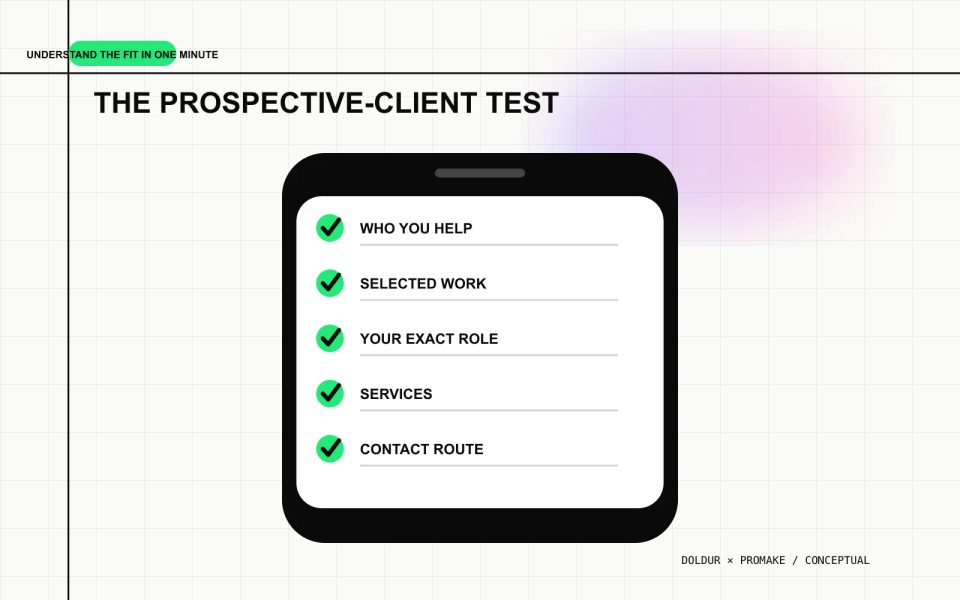
Then open every media link, confirm image and artwork rights, test contact delivery, check keyboard focus, and remove old availability. Review the portfolio after every major project, but add work only when it improves the selection.
Let the portfolio make a specific case
The goal is not to prove that the producer has been busy. It is to help the right client imagine a relevant collaboration and know how to begin.
Choose the work. Name the role. Explain the context. Make contact easy. That is a complete portfolio.
FAQs
How many projects should a music producer portfolio include?
Three to six strong, relevant projects are enough for many producers. Add more only when they show a distinct service, audience, or capability without weakening the selection.
Can I include unreleased music in my portfolio?
Only with explicit permission and an appropriate access method. Do not publish private demos, sessions, client names, artwork, or project details without approval.
Should a producer list equipment?
List equipment only when it changes client fit or the service being offered. A long gear list does not replace evidence of listening, decision-making, communication, and accurate credits.
What if I have no client testimonials?
Use precise project records, approved credits, and a clear process. Do not create anonymous or composite testimonials to fill the section.
Should I put prices on a producer website?
Publish prices when the service is standardized and the scope, revisions, deliverables, taxes, and payment terms are clear. For variable production work, a qualified enquiry may be more honest.